Choosing between paperboard and rigid boxes is an important decision for chocolate manufacturers and confectionery brands. Both can create attractive retail packaging, but they serve different purposes and involve different production and supply chain considerations.
A folding carton may be the practical choice for a chocolate bar sold through supermarkets, while a rigid box may make more sense for a seasonal gift collection or a premium assortment.
The difference is not simply about which box looks more expensive. Buyers need to consider how the product will be sold, how many units will be produced, how the packaging will be stored, and what customers are expected to do with it after purchase.
For brands planning a new chocolate packaging project, understanding these differences early can help avoid unnecessary costs and ensure the packaging matches the product’s commercial purpose.
1. Understanding the Difference Between Paperboard and Rigid Boxes
Although both packaging types are made from paper-based materials, their construction is quite different.
Paperboard Folding Cartons
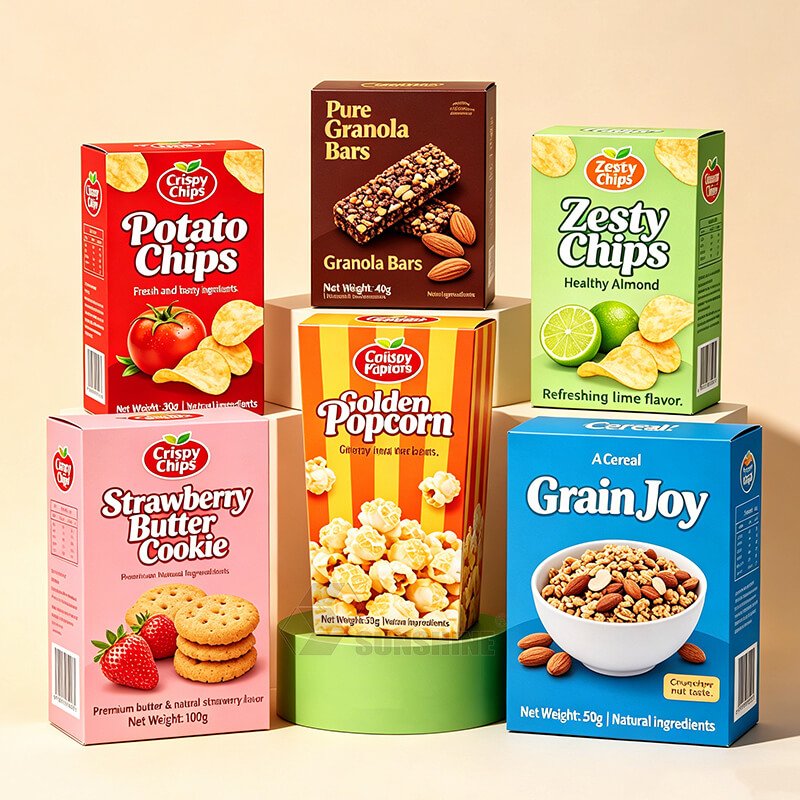
Paperboard folding cartons are made from printable paperboard that is cut, creased, folded, and glued into a finished box.
They are generally supplied flat and assembled during the packing process. This makes them practical for products manufactured in larger quantities and distributed through conventional retail channels.
Common applications include:
- Chocolate bar cartons
- Small chocolate assortment boxes
- Individual confectionery cartons
- Multi-pack chocolate products
- Retail chocolate gift packs
Folding cartons can be customized in different dimensions and structures, with a wide range of printing and finishing options.


Rigid Boxes
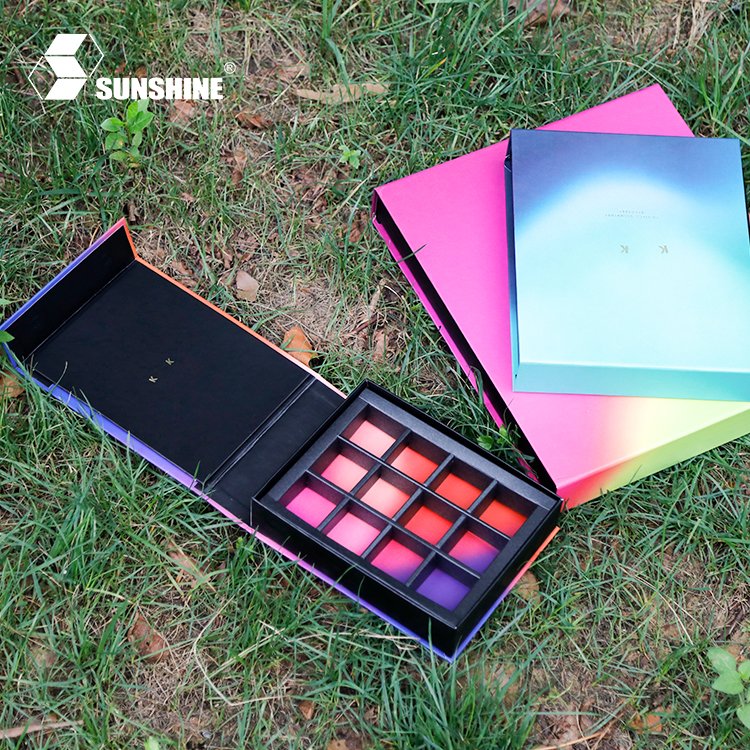
Rigid boxes are constructed using thick, non-collapsible board, usually wrapped with printed or decorative paper.
Unlike conventional folding cartons, they retain their shape and have a more substantial feel. Common designs include lift-off lid boxes, magnetic closure boxes, and drawer-style boxes.
They are often used for:
- Premium chocolate gift sets
- Seasonal chocolate collections
- Corporate gifts
- Limited-edition products
- High-value assorted chocolate selections
Some rigid box designs can be made collapsible, but conventional rigid boxes generally require more space during storage and transportation.
The construction method is the main reason the two packaging types differ in cost, handling, and production efficiency.
2. The Most Important Difference: What Is the Packaging Being Sold For?
The intended sales channel should influence the packaging decision from the beginning.
A chocolate bar designed for everyday supermarket purchases has different commercial requirements from a gift box sold during Christmas or Valentine’s Day.
For everyday retail products
Folding cartons are often more practical. They offer a printable outer surface, can be produced in high quantities, and are easier to store flat before use.
For brands competing in supermarkets, the packaging needs to communicate the product clearly while keeping the overall unit cost under control.
For premium gifting
Rigid boxes can create a more substantial presentation. Their solid construction gives the package a different opening experience and makes them suitable for products positioned as gifts.
They are particularly relevant when the box itself forms part of the perceived value of the purchase.
For seasonal collections
The choice depends on the expected selling price and order volume. A limited-edition chocolate collection may justify a rigid box, while a larger seasonal retail program may benefit from a customized folding carton.
The packaging should support the product’s selling purpose rather than simply make it look more expensive.

3. Comparing the Two Options Across Key Business Factors
For purchasing teams, the most useful comparison is not limited to appearance. It should include the full operational requirements of the packaging.
| Consideration | Paperboard Folding Cartons | Rigid Boxes |
|---|---|---|
| Construction | Cut, creased, folded and glued | Thick board wrapped with decorative paper |
| Delivery format | Usually supplied flat | Usually supplied assembled |
| Storage space | More efficient before assembly | Requires more space |
| Production suitability | Well suited to larger production runs | Better suited to projects where presentation justifies added construction |
| Unit cost | Generally more economical | Generally higher |
| Customization | Flexible sizes, structures and printing | Flexible shapes, wrapping materials and opening styles |
| Opening experience | Functional and straightforward | More substantial and gift-oriented |
| Retail application | Everyday and premium retail | Premium retail and gifting |
| Packaging complexity | Usually simpler | Often involves more components and manual operations |
These are general differences. Actual performance and cost depend on the box dimensions, construction, order quantity, finishing, and supplier’s production process.
4. How the Choice Affects the Total Packaging Cost
One mistake buyers sometimes make is comparing the quoted price of one finished box without considering the other costs involved in using it.
A better comparison looks at the total packaging cost, including storage, transportation, and packing operations.
Manufacturing Cost
Folding cartons generally use a relatively straightforward converting process. The paperboard is printed, die-cut, creased, and glued.
Rigid boxes require additional construction. The thick board must be prepared and assembled, then wrapped with the selected paper. Depending on the design, additional components such as inserts, ribbons, or magnetic closures may also be needed.
These extra steps can increase labor and material costs.
Storage and Warehouse Costs
Folding cartons are usually delivered flat, allowing more units to be stored in a smaller space.
This can be especially valuable for chocolate manufacturers operating multiple production lines or managing several packaging designs.
Rigid boxes are commonly delivered in their finished shape. Their larger storage volume can affect warehouse capacity, especially when a company needs to hold inventory for seasonal campaigns.
Transportation Costs
The delivery format also affects freight planning.
Flat-packed cartons generally use space more efficiently. Fully assembled rigid boxes occupy more volume relative to the number of units being transported.
For international buyers, this difference may become significant when ordering large quantities or shipping packaging over long distances.
Packing Line Efficiency
A folding carton can be supplied for automatic or manual carton erection, depending on its structure and the customer’s equipment.
Rigid boxes may require a different packing arrangement because they are already assembled and are not handled in the same way as flat cartons.
For manufacturers with established high-volume packing operations, compatibility with existing equipment should be evaluated before choosing the packaging format.
The most economical solution is therefore not always the one with the lowest quoted box price. Buyers should compare the total cost of getting the packaging manufactured, stored, delivered, and filled.

5. Consider the Chocolate Product and Its Presentation Requirements
The packaging format should also reflect the quantity and arrangement of chocolate products inside.
A single chocolate bar, a box of assorted pralines, and a multi-flavor gift collection do not have the same packaging requirements.
Chocolate Bars
For individually wrapped chocolate bars, folding cartons are often a suitable outer packaging format.
They provide space for product information and branding without adding the construction complexity of a rigid box.
For multi-pack chocolate bars, the carton can also be developed around the number and arrangement of individual units.
Chocolate Assortments
Assorted chocolates may require internal components to keep individual pieces separated and organized.
Depending on the product, these may include:
- Paperboard dividers
- Folded paper inserts
- Molded inserts
- Individual product compartments
Both folding cartons and rigid boxes can accommodate internal components. The right solution depends on the number of pieces, their shape, and the level of organization required.
The insert should be designed around the actual chocolate dimensions rather than relying on a generic compartment layout.
Chocolate Gift Collections
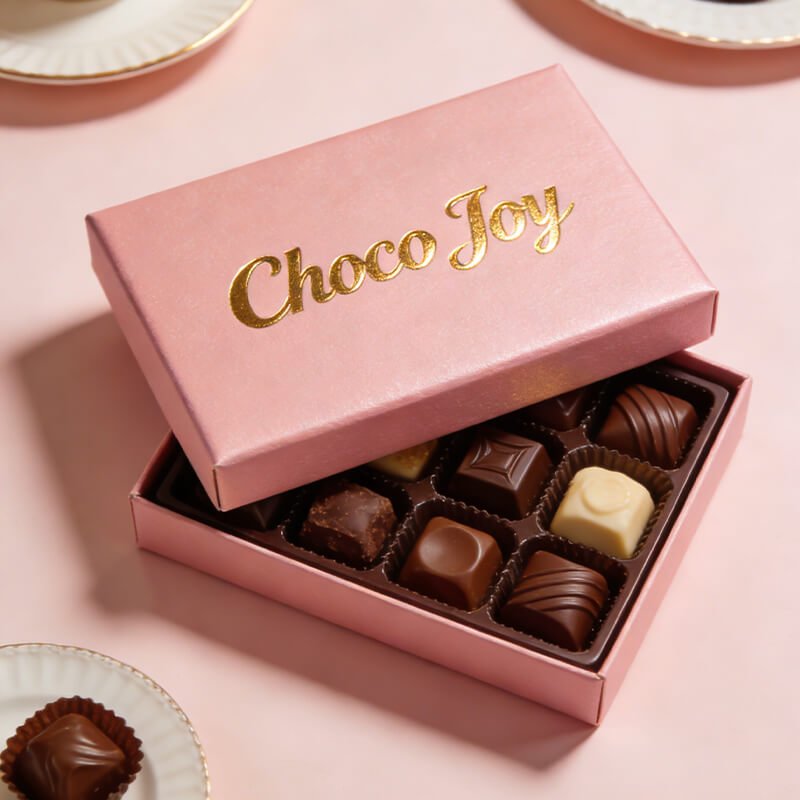
Gift collections often require a more considered opening experience. The box may include several product sections, a removable tray, or a separate lid.
A rigid box can be appropriate when the package is intended to contribute significantly to the gift presentation.
However, a well-designed folding carton can also be suitable for gift products where a fully rigid construction is not commercially necessary.


6. Does a Rigid Box Always Look More Premium?
Not necessarily.
Rigid boxes have a naturally substantial feel, but perceived quality also depends on the artwork, finishing, proportions, and overall construction.
A poorly designed rigid box can look ordinary, while a carefully produced folding carton can create a refined and professional retail presentation.
For folding cartons, brands can consider:
- Matte or gloss lamination
- Metallic foil stamping
- Embossing and debossing
- Spot UV
- High-quality offset printing
- Specialty paper finishes
These techniques can create different visual and tactile effects without changing the basic folding carton construction.
The important point is to use finishing selectively. A chocolate brand does not need every available decoration technique to create an effective package.
The final appearance should fit the product’s price range and intended customer.

7. Sustainability and Material Use: Look Beyond the Box Type
Both folding cartons and rigid boxes can use paper-based materials, but their overall environmental impact cannot be judged by the material name alone.
The complete packaging construction matters.
A folding carton may use fewer components and less material for a particular retail application. A rigid box may use thicker board, wrapping paper, and additional inserts.
However, the actual comparison depends on the design, weight, materials, manufacturing process, transportation, and end-of-life arrangements.
Buyers evaluating sustainability should ask:
- What paper-based materials are used?
- Does the construction include additional non-paper components?
- Are coatings or laminations likely to affect recycling?
- Can unnecessary inserts or decorative elements be removed?
- Is the packaging designed to fit the product without excessive empty space?
Recyclability also depends on local collection and recycling systems. A paper-based box should not automatically be described as recyclable without considering its complete construction.
For brands with specific environmental targets, it is worth reviewing the packaging specification with the manufacturer before finalizing the design.
8. How to Make the Right Decision for Your Chocolate Brand
There is no single packaging format that works for every chocolate product. The following guide can help narrow down the options.
| Your Product or Business Requirement | More Suitable Starting Point |
|---|---|
| Everyday chocolate bars | Paperboard folding cartons |
| Large-volume supermarket products | Paperboard folding cartons |
| Individual retail chocolate packs | Paperboard folding cartons |
| Multi-SKU chocolate ranges | Paperboard folding cartons |
| Premium gift collections | Rigid boxes |
| Corporate chocolate gifts | Rigid boxes |
| Limited-edition presentation sets | Rigid boxes |
| Cost-sensitive seasonal retail products | Paperboard folding cartons |
These recommendations are starting points, not fixed rules. Some premium products work well in folding cartons, while certain rigid box projects may be commercially viable at larger volumes.
Before making the final decision, buyers should consider the retail price, order quantity, packaging budget, packing process, and distribution requirements together.
9. Questions to Ask Your Packaging Manufacturer
Once you have identified the preferred packaging format, the next step is to confirm whether the proposed design can be manufactured efficiently.
A useful discussion with the supplier should cover more than the appearance of the finished box.
Consider asking:
Can the packaging be customized to our product dimensions?
The manufacturer should work from the actual product or its individual packaging components rather than estimate dimensions from a photograph.
What is the most practical structure for our order quantity?
A complex structure may look attractive, but it should be commercially suitable for the intended production volume.
Can the carton be supplied flat?
For folding cartons, confirm the delivery format and whether it is compatible with the customer’s packing process.
Can different SKUs share the same structure?
Using one structure for several products may simplify packaging management, provided their dimensions are compatible.
What finishing options are available?
Discuss the required print quality and decorative effects before artwork is finalized.
Can we approve a sample before bulk production?
A physical sample helps confirm dimensions, folding performance, appearance, and compatibility with the product.
Clear answers to these questions help buyers compare suppliers on more than price alone.
10. Paperboard Folding Cartons for Custom Chocolate Packaging
At Sunshine Packaging, our core focus is custom paperboard boxes and folding cartons for food and retail products.
For chocolate manufacturers and confectionery packaging buyers, we provide customized folding carton solutions based on product dimensions, artwork, printing requirements, and order specifications.
Our capabilities include:
- Custom carton sizes and structures
- Offset printing
- Matte and gloss finishes
- Hot foil stamping
- Embossing and debossing
- Spot UV and other finishing options
Folding cartons can be a practical alternative to rigid boxes for many retail chocolate products, particularly when storage efficiency, production volume, and packaging cost are important considerations.
If you are developing a new chocolate product or reviewing the packaging for an existing range, we can help assess the carton requirements and provide a quotation based on your specifications.
Need custom paperboard chocolate packaging boxes?
Send us your product dimensions, reference photos, artwork requirements, and estimated order quantity. Our team can review the project and discuss a suitable folding carton solution.
Frequently Asked Questions
1. Are paperboard boxes cheaper than rigid boxes for chocolate packaging?
In many applications, yes. Folding cartons generally involve simpler construction and are supplied flat, which can also reduce storage and transportation costs. The actual price difference depends on size, materials, finishing, quantity, and box design.
2. Are rigid boxes stronger than folding cartons?
Rigid boxes generally have a more solid construction and retain their shape. However, this does not automatically make them the better option for every product. The required level of protection should be assessed based on the chocolate’s primary packaging and distribution conditions.
3. Can folding cartons be used for premium chocolate packaging?
Yes. High-quality printing, foil stamping, embossing, and carefully developed carton structures can create a premium appearance. The choice depends on the product’s positioning and the desired customer experience.
4. Are rigid boxes suitable for mass-produced chocolate products?
They can be used for larger production programs, but their higher construction complexity and storage volume should be considered. For everyday retail products, folding cartons are often a more practical starting point.
5. Can folding cartons include inserts for assorted chocolates?
Yes. Paperboard inserts and other suitable internal components can be developed to organize different chocolate pieces. The insert design should be based on the number, shape, and dimensions of the products.
6. Can paperboard folding cartons be customized for different chocolate sizes?
Yes. Folding cartons can be produced in custom dimensions and structures. For product ranges with similar packaging requirements, a common carton structure may be used across multiple SKUs.
7. Do rigid boxes take up more warehouse space?
Conventional rigid boxes are usually delivered assembled, so they generally occupy more storage space than flat-packed folding cartons. Collapsible rigid box designs are also available, but their construction and cost should be evaluated separately.
8. Which packaging type is better for chocolate gift sets?
Rigid boxes are often selected for high-end gift sets because of their solid construction and opening experience. However, folding cartons can also work well for retail gift collections where cost, storage, and production efficiency are important.