Ready meal packaging has to do more than carry a product from the production line to the supermarket shelf. It needs to fit the meal format, work with the existing packing process, provide enough space for product information, and maintain a consistent appearance across different product variations.
For food manufacturers, choosing custom ready meal packaging boxes is therefore not simply a matter of selecting a carton size or printing a logo. The packaging specification needs to reflect how the product is packed, distributed, displayed, and sold.
A well-planned folding carton can help organize a product range, improve shelf presentation, and make packaging operations more predictable.
This article looks at the practical considerations involved in developing custom paperboard cartons for ready meal products, from the first specification to bulk production.
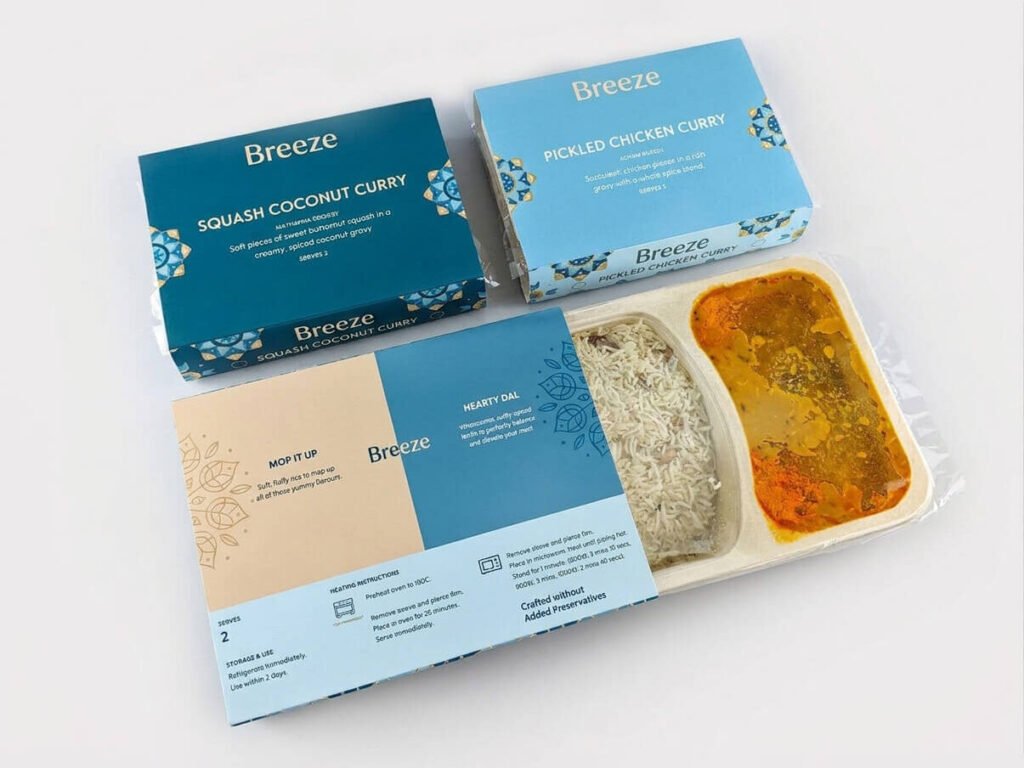
1. Start with the Actual Product and Packaging Format
Before requesting a quotation, manufacturers should identify exactly what the paper box needs to package.
Ready meals come in many formats, including individual rice meals, pasta dishes, prepared meat meals, family-size portions, and meal kits. Their packaging requirements can vary considerably.
For example, a carton designed around a shallow meal tray will have different proportions from one intended to hold a taller container or a multi-component meal kit.
The first step is to identify the primary packaging format:
- A sealed tray with a paperboard sleeve
- A tray placed inside a folding carton
- A sealed pouch packed inside an outer carton
- Multiple individually packed components grouped in one carton
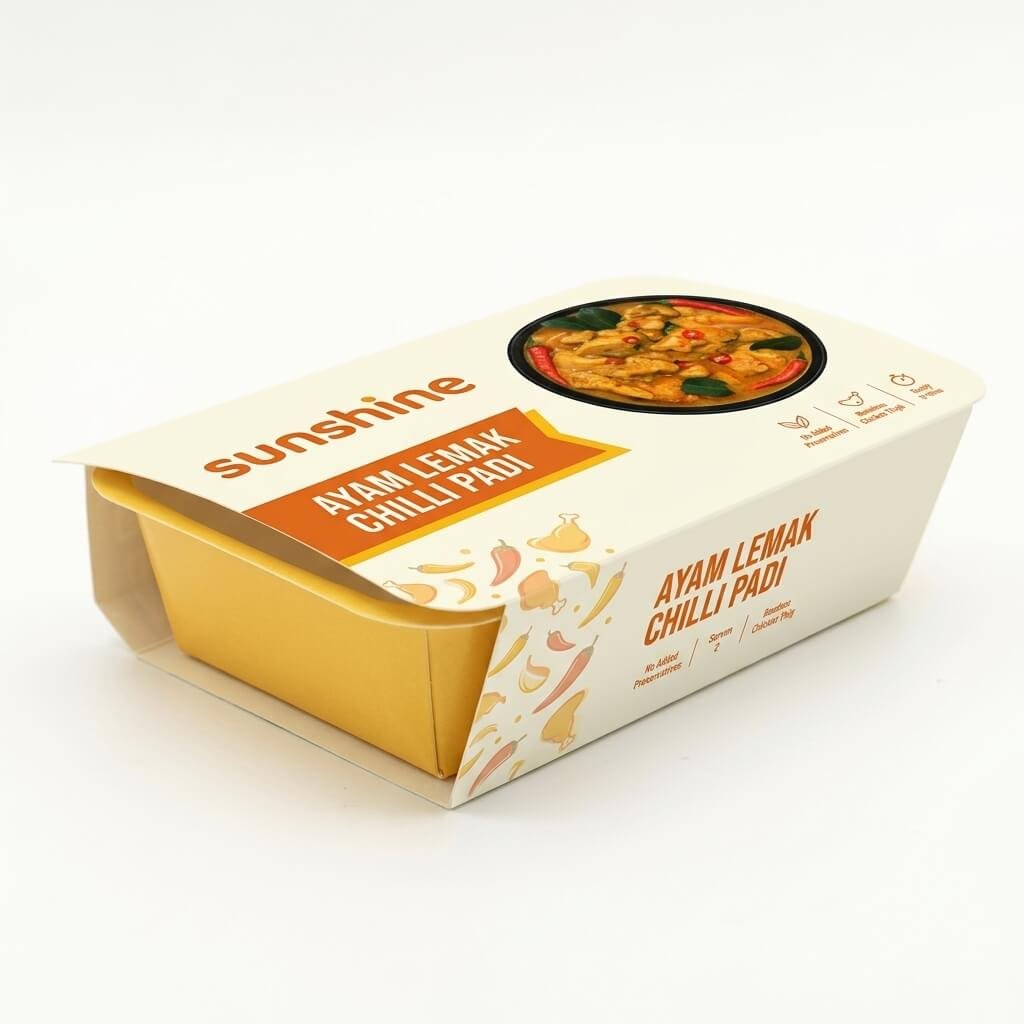
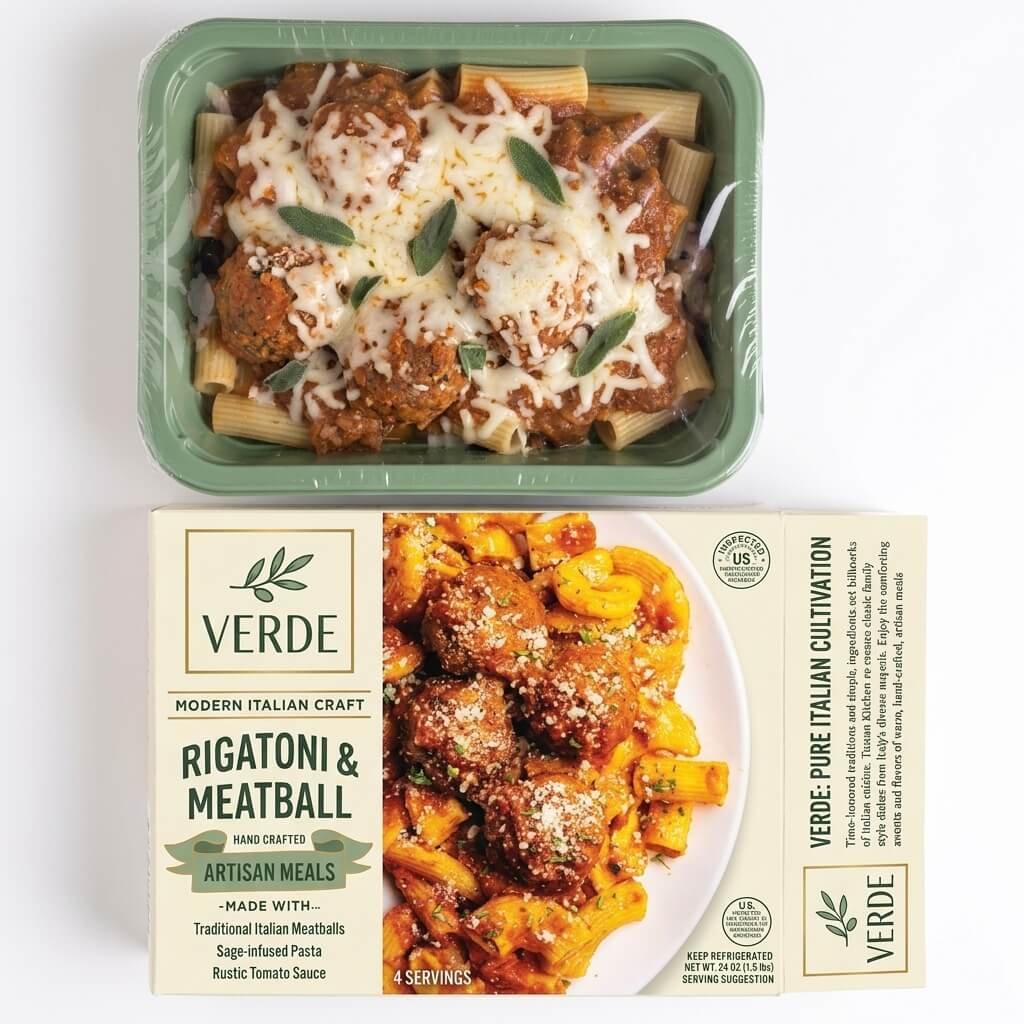
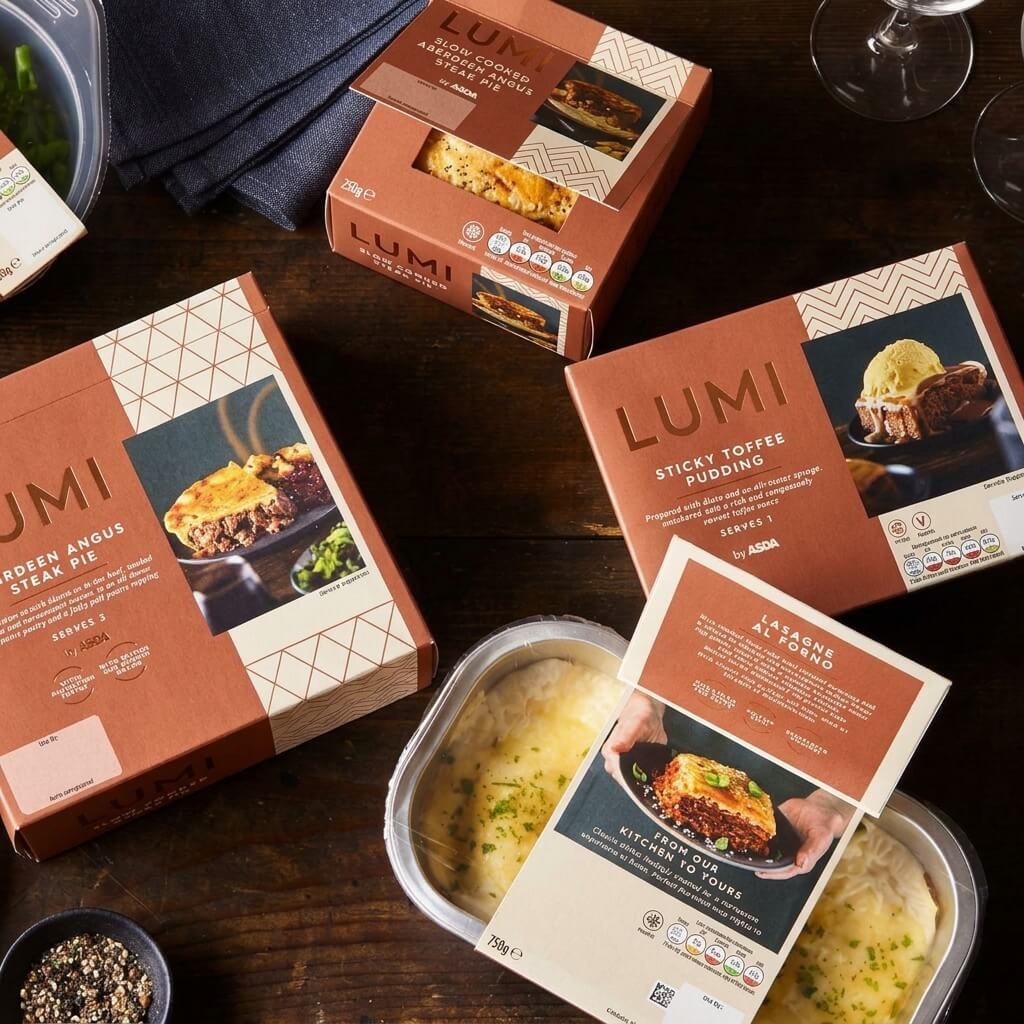
This distinction matters because the paperboard box is not always in direct contact with the food. In many retail applications, it serves as the secondary packaging layer, providing product identification, branding, and additional handling support.
Defining its role at the beginning helps prevent unnecessary structural changes later.
2. Choose a Carton Structure That Matches the Packing Process
A ready meal carton should be designed around the way the product will be packed, not just how it looks in a product photograph.
Different carton structures can suit different production and packing arrangements.
Folding Cartons
A conventional folding carton is suitable for products that require a fully enclosed outer box. It provides printable panels for product information and branding, while allowing the structure to be customized around the packaged meal.
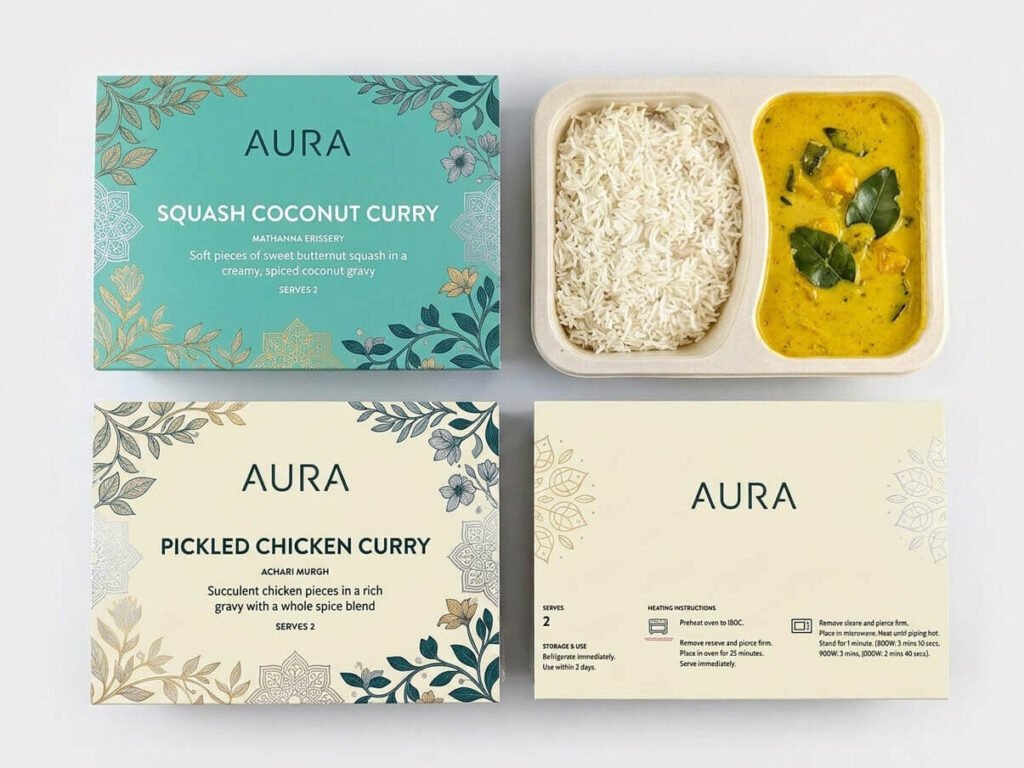
Depending on the design, the carton may use tuck-in flaps, locking features, or other closure arrangements.
Paperboard Sleeves
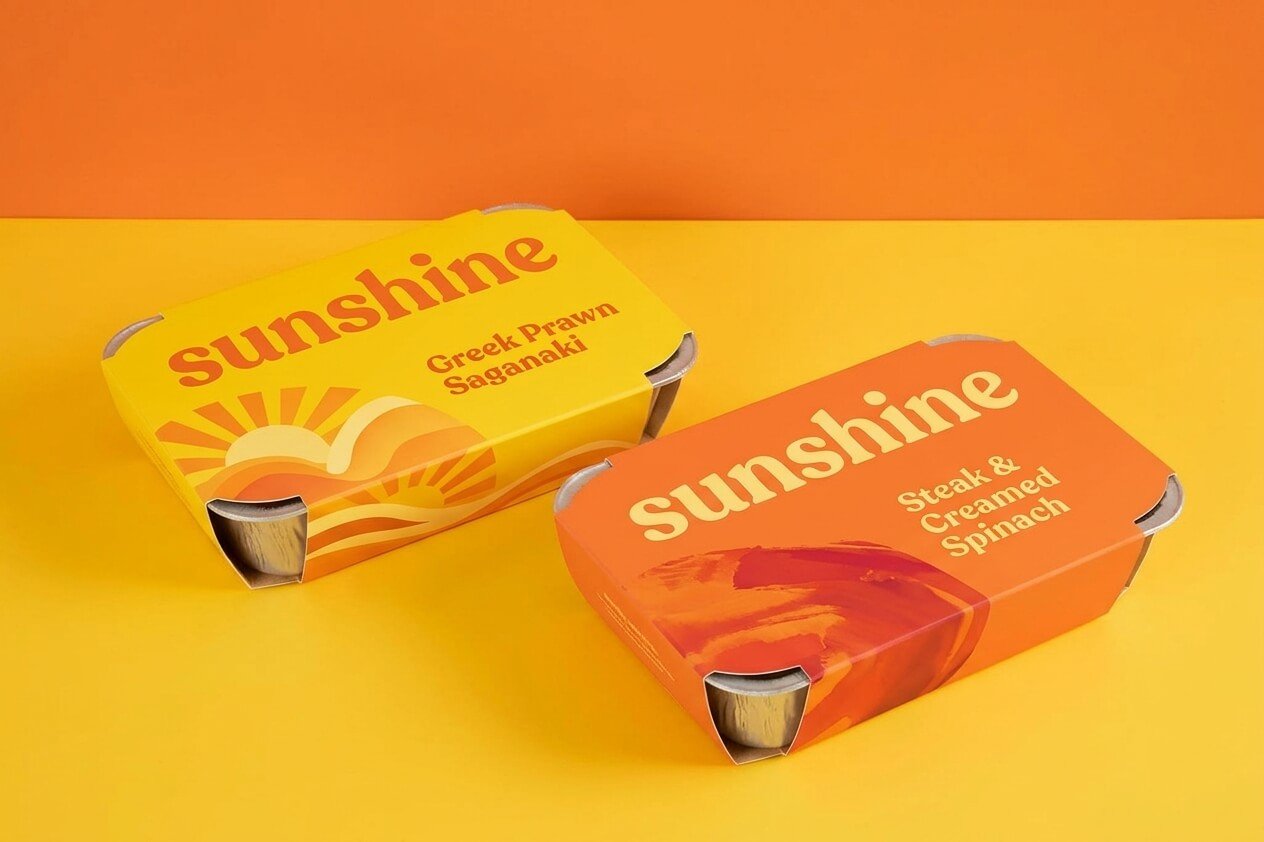
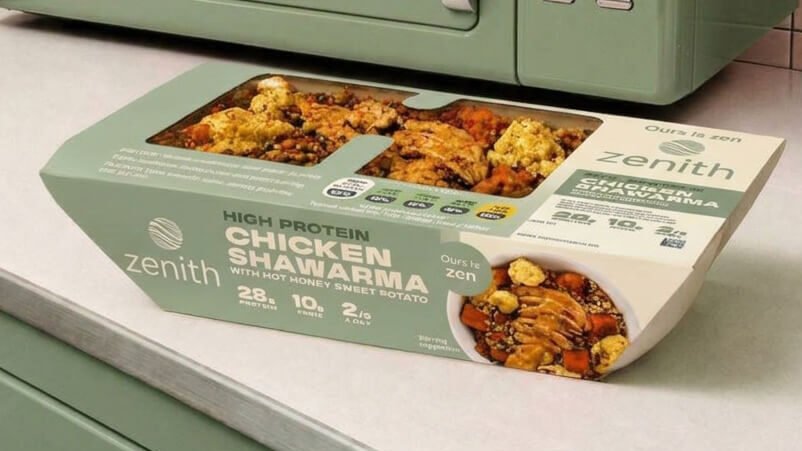
Sleeves are commonly used around prepared meal trays. They leave part of the primary container visible while providing space for the product name, ingredients information, branding, and other retail details.
Their dimensions need to match the tray accurately. A sleeve that is too loose may shift during handling, while one that is too tight may be difficult to apply.
Multi-Component Cartons
Some meal products contain several components, such as a main dish, sauce pouch, seasoning sachet, or side portion. These products may require an outer carton with a suitable internal arrangement.
The internal components should be considered during structural development rather than added as an afterthought.
The most suitable structure depends on the product configuration, packing sequence, and required presentation.
3. Get the Dimensions Right Before Designing the Artwork
One of the most common causes of packaging revisions is starting the artwork before the carton dimensions have been confirmed.
For ready meal packaging, the dimensions should be based on the actual packaged product, including its tray, lid, pouch, or other components.
A useful specification should include:
- Length, width, and height of the primary container
- Maximum dimensions after filling and sealing
- Any protruding edges or lid features
- Required clearance for loading and removal
- Whether the carton needs to fit an existing packing machine
It is also important to distinguish between the dimensions of the food container and the finished carton. They are not necessarily the same.
For a new packaging project, providing a physical sample of the primary container is often more useful than relying on approximate measurements alone.
The carton manufacturer can then develop the structure around the actual product and prepare a sample for fit confirmation.
4. Design Packaging Around Multiple SKUs
Many ready meal manufacturers sell several products under one brand. A product range may include different recipes, portion sizes, flavors, or nutritional profiles.
If every SKU uses a completely different carton structure, packaging management can become unnecessarily complicated.
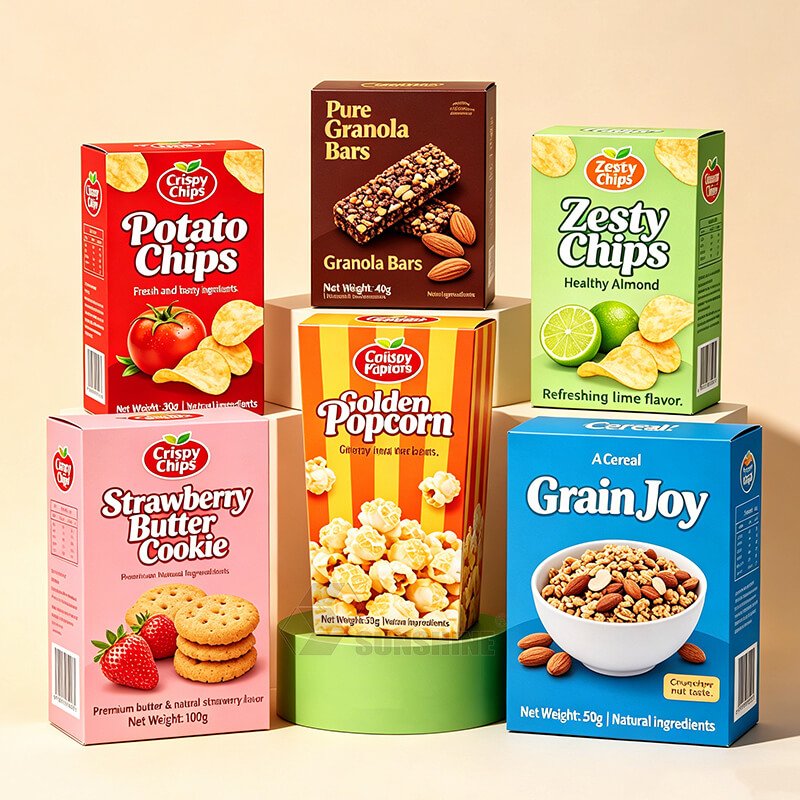
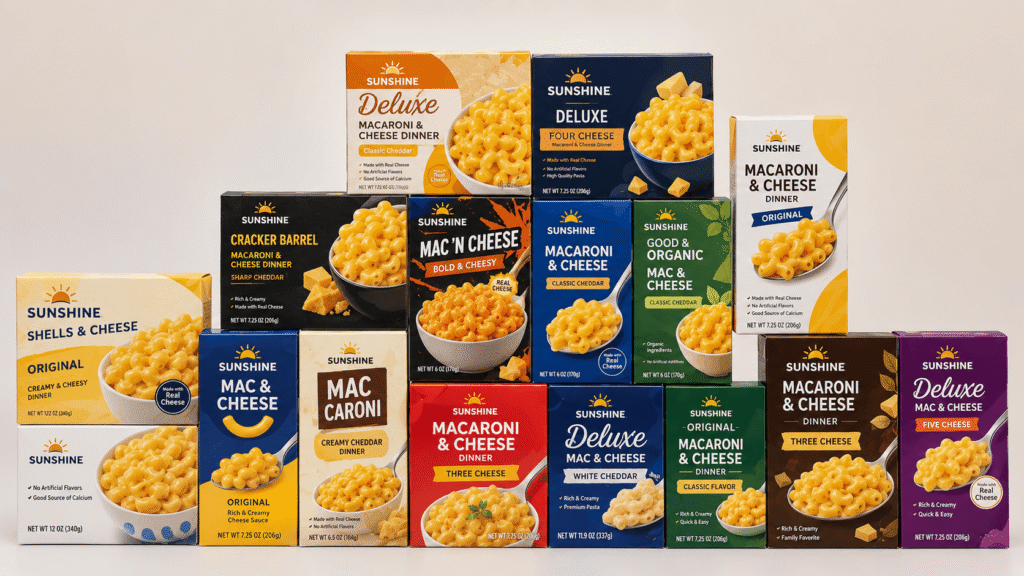
A more practical approach is to establish a consistent carton format where possible, then distinguish individual products through artwork.
For example, a range of pasta meals might use:
- The same carton dimensions
- A consistent brand logo position
- The same general information layout
- Different product names and food images
- Distinct colors for each recipe
This creates a recognizable product family while making packaging specifications easier to manage.
However, a shared carton structure should only be used when the packaged products have compatible dimensions and packing requirements. Standardization should not come at the expense of a proper fit.
For brands with frequent product launches, planning the packaging system around a complete product range can also reduce the number of structural designs that need to be maintained.
5. Plan the Printed Panels for Retail and Product Information
Ready meal cartons often carry a considerable amount of information. The available printing area needs to be planned carefully so that mandatory details remain readable and the brand presentation stays consistent.
Depending on the market and product category, printed panels may need to accommodate:
- Product name and description
- Food photography or product illustrations
- Ingredient and allergen information
- Nutrition information
- Preparation and storage instructions
- Net weight and serving information
- Barcode and product identification
- Manufacturer or distributor details
The final information requirements should be confirmed by the food manufacturer or its regulatory team before artwork approval.
From a packaging production perspective, it is important to leave sufficient space for barcodes, small text, and other technical elements. These should not be squeezed into the design at the last minute.
A well-organized layout also makes it easier to update one SKU without changing the entire visual identity of the product range.
6. Consider How the Carton Will Be Displayed in Stores
Ready meals are sold through different retail channels, including supermarkets, convenience stores, and specialist food retailers.
The way a carton is displayed can influence its structural and visual requirements.
For example, a product may be displayed:
- Flat on a refrigerated or frozen shelf
- Upright with the front panel facing consumers
- Stacked with other cartons of the same product
- Arranged in a mixed product range
- In a retail-ready case or display unit
The front panel should communicate the product clearly when viewed from the expected shelf position.
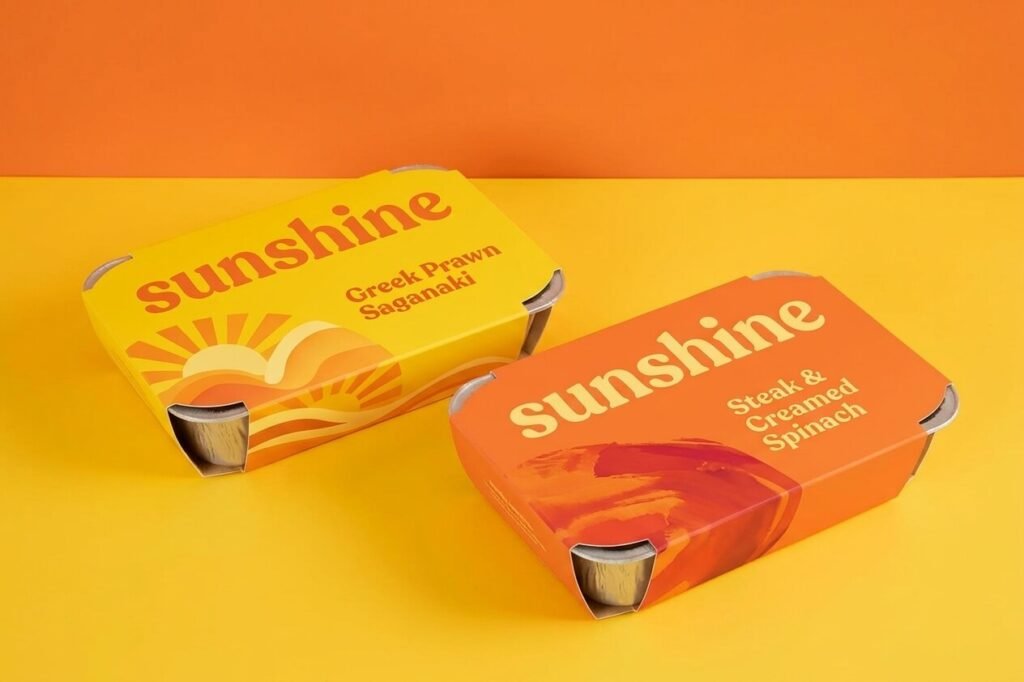
For products sold in several flavors, consistent placement of the brand logo and product name can help shoppers recognize the range more quickly.
It is also worth checking how the carton looks when several units are placed together. A design that looks attractive on a single box may not create the same effect across a full shelf.
Retail presentation should therefore be considered during the packaging development stage, rather than after the carton structure has been finalized.
7. Prepare Artwork with Manufacturing Requirements in Mind
A packaging design may look correct on a computer screen but still require adjustments before it can be printed and converted into a finished carton.
The artwork needs to match the approved carton dieline, including the position of folds, cutting lines, glue areas, and panel boundaries.
Several details deserve attention:
Text placement: Important information should not sit too close to cutting or folding edges.
Image positioning: Product photographs and graphics should align correctly across adjoining panels.
Color consistency: Brand colors should be specified clearly, particularly when the same design is used across multiple SKUs.
Barcode placement: Barcodes should be positioned on an appropriate flat panel and remain clear of folds, seams, and other design elements.
Version control: Each SKU should have an identifiable artwork version to reduce the risk of printing outdated files.
Before mass production, the final artwork should be checked against the approved dieline and sample.
This step is especially important for brands managing frequent product updates or working with several packaging suppliers.
8. Think About Carton Storage and Distribution
Packaging decisions should also account for what happens after the cartons leave the converting factory.
Folding cartons are normally supplied flat, which helps reduce storage and transportation space compared with shipping fully assembled boxes.
However, the carton design and delivery arrangement still need to suit the customer’s warehouse and production setup.
Before placing an order, buyers should confirm:
- Whether cartons will be delivered flat or assembled
- How many cartons are packed in each bundle or outer case
- Whether the cartons need to be sorted by SKU
- How the packaging will be stored before use
- Whether the delivery schedule matches the production plan
For manufacturers managing several ready meal products, clear SKU identification on outer packing can make warehouse handling more straightforward.
The carton quantity per bundle, case, or pallet should also be discussed with the supplier. These details may affect storage space and the way packaging is issued to the production line.
9. What to Confirm Before Starting Bulk Production
A packaging project should not move directly from an approved design to mass production without checking the physical carton.
A pre-production sample gives the buyer an opportunity to review the actual structure and appearance.
For ready meal packaging, the review should cover more than print quality.
A practical approval checklist includes:
- Carton dimensions and overall fit
- Opening and closing method
- Compatibility with the primary container
- Folding and assembly performance
- Glue position and carton construction
- Artwork alignment and color appearance
- Barcode and printed information
- Packing and handling requirements
If the carton will run through an automated packing line, the sample should also be evaluated under the relevant packing conditions.
Any changes should be agreed upon before the production specification is finalized. This creates a clear reference for both the buyer and the manufacturer.
10. How to Request a Quote for Custom Ready Meal Packaging Boxes
A detailed inquiry helps the manufacturer understand the project and prepare a more accurate quotation.
Instead of sending only a product photo, buyers should provide as much of the following information as possible:
| Information | Details to Provide |
|---|---|
| Product type | Rice meal, pasta, prepared meal, meal kit, etc. |
| Packaging format | Folding carton, sleeve, or outer box |
| Primary container | Tray, pouch, bowl, or other format |
| Finished size | Length × width × height |
| Paperboard requirements | Preferred material or required specifications, if known |
| Printing | CMYK, Pantone, or existing artwork |
| Finishing | Matte, gloss, varnish, foil, or other requirements |
| Order quantity | Quantity per design or SKU |
| Delivery destination | Country and delivery location |
| Reference files | Product photos, carton samples, or dielines |
If the final dimensions or structure have not yet been decided, buyers can send a physical container sample or a drawing for initial evaluation.
A professional carton manufacturer can review the information, discuss the appropriate folding carton structure, and prepare a quotation based on the confirmed specifications.
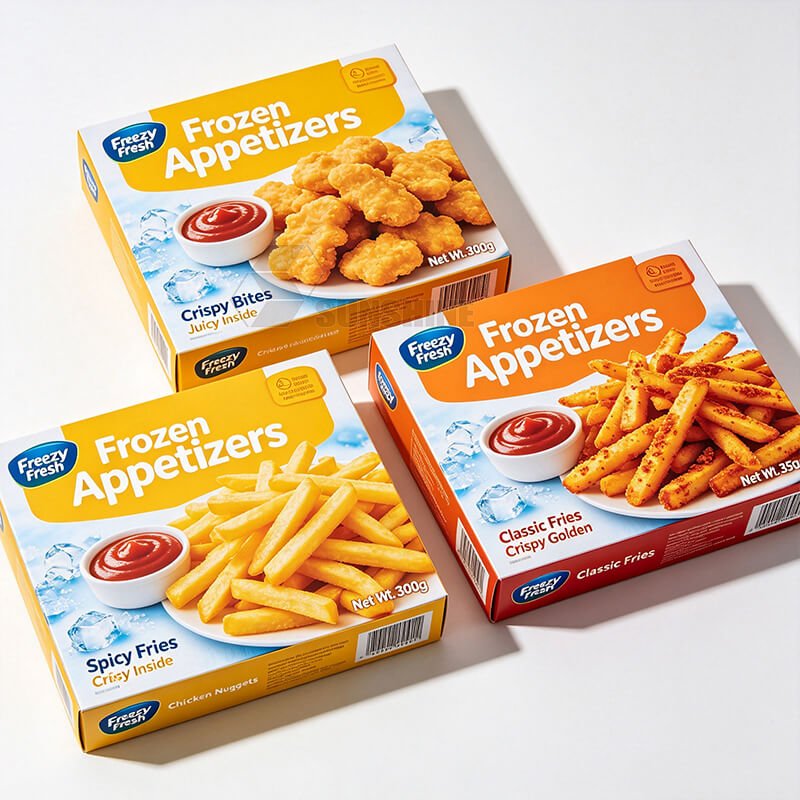
Custom Ready Meal Packaging Boxes from Sunshine Packaging
Sunshine Packaging manufactures custom folding cartons and paperboard boxes for food manufacturers, retailers, and packaging solution providers.
For ready meal projects, we produce custom-sized cartons and sleeves designed around the customer’s primary packaging format, product dimensions, artwork, and production requirements.
Our manufacturing capabilities include:
- Custom carton structures and dimensions
- Offset printing with CMYK and Pantone colors
- Matte and gloss finishes
- Hot foil stamping, embossing, and spot UV
- Folding carton production for different ready meal formats
We understand that a carton is part of a wider packaging operation. Its dimensions, structure, printed information, and production consistency all need to work together.
Whether you are developing a new ready meal product or updating packaging across an existing product range, our team can help review your requirements and provide a suitable paperboard carton solution.
Looking for a manufacturer for custom ready meal packaging boxes?
Send us your product dimensions, packaging format, estimated order quantity, and artwork requirements. We will review your project and provide a quotation.
Frequently Asked Questions
1. What types of ready meals can use custom paperboard packaging boxes?
Custom paperboard cartons can be developed for rice meals, pasta dishes, prepared meat meals, meal kits, family-size meals, and other retail-ready food products. The structure depends on the dimensions and format of the primary packaging.
2. What is the difference between a ready meal sleeve and a folding carton?
A sleeve is an open-ended paperboard cover that usually fits around a tray or container. A folding carton is a more enclosed box structure. The choice depends on the level of coverage, product presentation, and packing requirements.
3. Can ready meal boxes be customized for different product sizes?
Yes. Carton dimensions and structures can be customized to fit different trays, pouches, or product configurations. For a product range, compatible SKUs may also share a common carton format.
4. Can one carton design be used for multiple ready meal flavors?
In many cases, yes. If the products use the same container dimensions and packaging format, the same carton structure can be used with different printed artwork for each flavor or recipe.
5. Can you print different designs for multiple SKUs?
Yes. Different artwork can be produced for individual SKUs. Buyers should confirm the quantity required for each design and provide clearly identified artwork files before production.
6. What information is needed for a ready meal packaging quotation?
The most useful information includes the product type, primary container dimensions, required carton format, printing specifications, order quantity, and delivery destination. A physical sample or drawing can also help with structural evaluation.
7. Can I receive a sample before placing a bulk order?
A pre-production sample can be arranged to check the carton structure, dimensions, and printed appearance before mass production. Sample requirements and costs depend on the project.
8. Do you manufacture custom ready meal folding cartons for overseas customers?
Yes. Sunshine Packaging works with international food businesses and packaging buyers on custom paperboard cartons. Customers can provide their specifications and artwork for project evaluation and quotation.