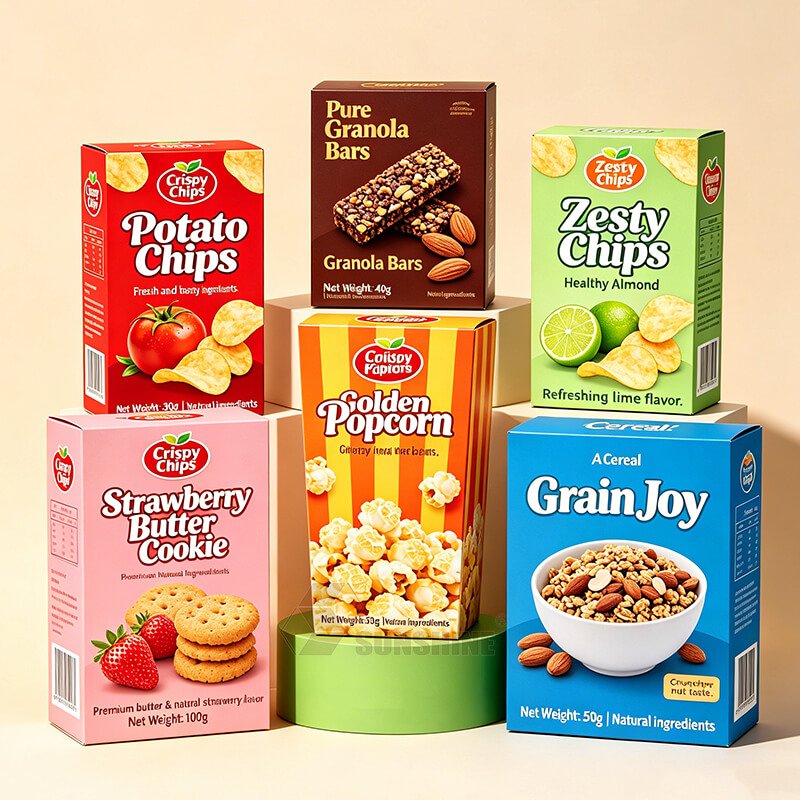
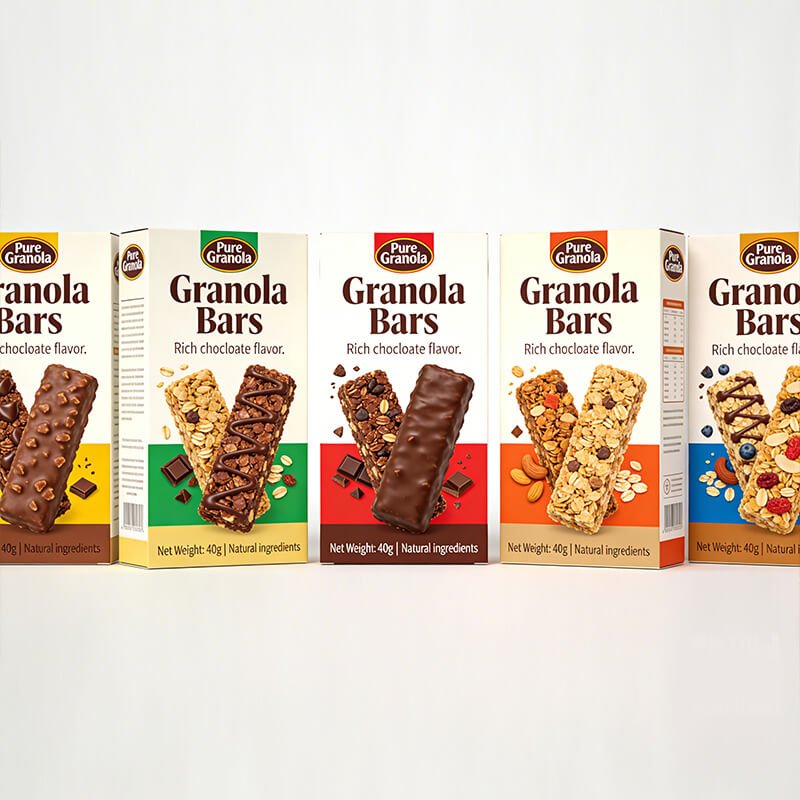
A decade ago, sustainability was often treated as a marketing feature. A food brand might add a small recycling symbol to its packaging or switch to kraft paper for a more natural appearance, and that was enough to appeal to environmentally conscious consumers.
Today, the conversation has changed dramatically.
Food manufacturers, retailers, and packaging buyers are under increasing pressure to reduce environmental impact while maintaining product quality, food safety, and competitive pricing. Large supermarket chains are introducing stricter packaging requirements. Governments are tightening regulations on packaging waste. Consumers are paying closer attention to what happens to a package after they’ve finished the product.
As a result, sustainability is no longer just a branding decision—it’s becoming part of the purchasing specification.
Over the years, we’ve noticed a clear shift in the questions buyers ask during packaging discussions. Instead of simply requesting recyclable materials, procurement teams now ask:
- Can this packaging be recycled in our target market?
- Does it contain certified sustainable paper?
- Will it comply with upcoming packaging regulations?
- Can we reduce plastic without affecting product protection?
- Is there a way to lower environmental impact without significantly increasing cost?
These questions reflect a broader understanding that environmentally friendly packaging isn’t defined by a single material or certification. It’s the result of multiple decisions made throughout the packaging development process.
Sustainability Means Different Things to Different Businesses
One of the biggest misconceptions surrounding sustainable packaging is that there is a universal definition of what “environmentally friendly” means.
In reality, priorities vary depending on the business.
A premium chocolate brand may focus on replacing plastic with recyclable paperboard to strengthen its sustainability message.
A frozen food manufacturer may prioritize reducing packaging weight to lower transportation emissions.
A private-label supplier producing millions of cartons each year may focus on improving material efficiency to reduce overall resource consumption.
All of these approaches contribute to sustainability, but they solve different problems.
That’s why experienced packaging buyers rarely begin by asking, “What’s the greenest material?”
Instead, they ask, “What’s the most practical solution for our product, supply chain, and target market?”
The Four Principles of Environmentally Friendly Food Packaging
Although every project is different, most sustainable food packaging strategies are built around four core principles.
1. Use Renewable Materials Whenever Possible
Paper remains one of the most widely used renewable packaging materials because it is derived from responsibly managed forests and can be replenished over time.
Many food brands now choose paperboard certified by organizations such as FSC to demonstrate responsible sourcing throughout their supply chain.
However, renewable doesn’t automatically mean environmentally friendly.
If excessive material is used or unnecessary production processes are added, the overall environmental impact can still be higher than expected.
The goal isn’t simply to choose renewable materials—it’s to use them efficiently.
2. Design Packaging That Can Be Recycled
Recyclability has become one of the most important considerations in food packaging.
Many countries have invested heavily in paper recycling infrastructure, making paperboard packaging one of the easiest materials for consumers to recycle.
But recyclable packaging only works if consumers can actually recycle it.
For example, combining paperboard with multiple plastic layers, metallic films, or difficult-to-separate materials may reduce the effectiveness of local recycling systems.
One lesson we’ve learned from working with international customers is that recycling capabilities vary significantly between regions.
A packaging solution that performs well in Germany may not be recycled the same way in another market.
Understanding where the product will be sold is just as important as selecting recyclable materials.
3. Reduce Material Without Reducing Performance
Many buyers assume sustainable packaging requires changing materials.
In many cases, the biggest opportunity lies in using less material altogether.
We’ve worked on projects where small structural improvements allowed customers to reduce paperboard usage while maintaining the same level of product protection.
Optimizing carton dimensions, improving die-line design, and eliminating unnecessary inserts can often reduce both environmental impact and production costs.
This approach benefits manufacturers as well as retailers, since lighter packaging generally improves transportation efficiency.
Sustainability doesn’t always require new materials.
Sometimes it begins with better engineering.
4. Consider the Entire Packaging Life Cycle
A package doesn’t stop affecting the environment once it leaves the factory.
Its environmental footprint includes:
- Raw material sourcing
- Manufacturing
- Transportation
- Retail distribution
- Consumer use
- Recycling or disposal
Focusing on only one stage can lead to misleading conclusions.
For example, replacing plastic with paper may appear more sustainable at first glance.
However, if the new packaging requires substantially more material or results in higher product damage during transport, the overall environmental benefit may be reduced.
This is why many procurement teams now evaluate packaging from a life-cycle perspective rather than focusing on a single environmental claim.
Why Food Products Require a Different Approach
Food packaging faces challenges that many other industries don’t.
Unlike cosmetics or electronics, food packaging must protect products from moisture, oxygen, grease, contamination, and physical damage while complying with strict food safety regulations.
For some applications, reducing plastic is relatively straightforward.
For others, maintaining product freshness may require carefully selected barrier materials.
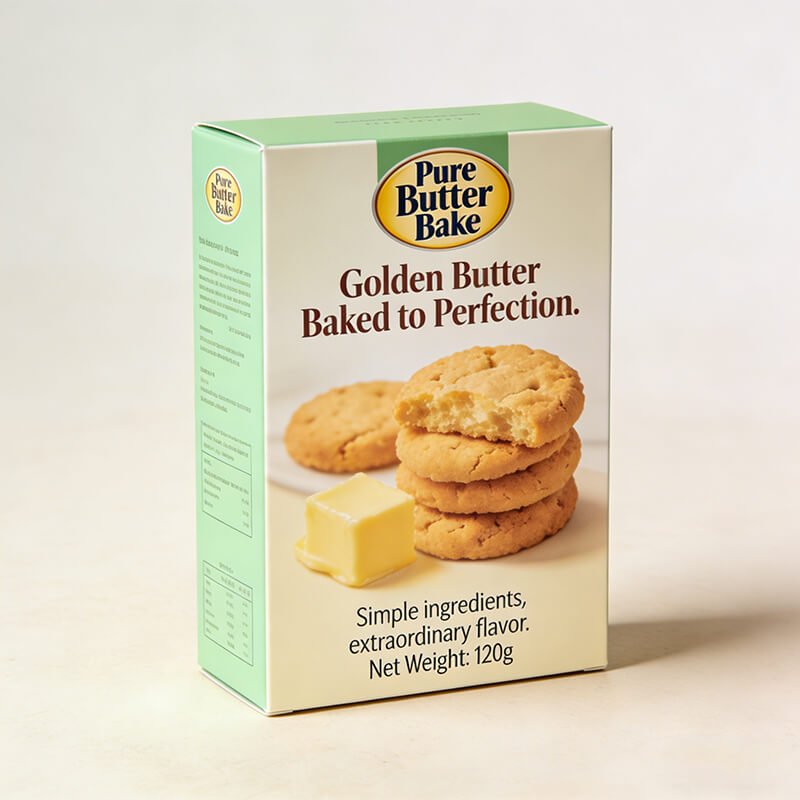
Take dry biscuits as an example.
The folding carton provides shelf presentation and structural protection, but freshness usually depends on the inner packaging.
Meanwhile, products such as frozen ready meals or oily snacks may require packaging materials with additional moisture or grease resistance.
The most environmentally friendly solution is therefore not always the one with the least material.
It’s the one that achieves product protection with the lowest overall environmental impact.
Sustainability Is Becoming a Business Requirement
Consumer demand continues to influence packaging decisions, but it isn’t the only driver.
Retailers, distributors, investors, and governments are all raising expectations.
Many supermarket groups now include sustainability criteria during supplier evaluations.
Large food manufacturers are publishing environmental targets covering packaging reduction, recyclability, and the use of responsibly sourced materials.
At the same time, governments around the world are introducing regulations designed to reduce packaging waste and encourage circular economy practices.
For packaging buyers, this means sustainability is no longer an optional project handled by the marketing department.
It has become part of procurement planning, product development, and long-term supply chain strategy.
Choosing environmentally friendly packaging today isn’t simply about meeting consumer expectations.
It’s about preparing products for the future marketplace.
Looking Beyond Labels
Terms such as eco-friendly, green, biodegradable, and sustainable appear on countless packaging products, but they don’t always tell the full story.
Experienced buyers tend to look beyond marketing claims and ask practical questions.
- How is the material sourced?
- Can the packaging actually be recycled where it’s sold?
- Does it meet food-contact requirements?
- Will it perform throughout the supply chain?
- Can it be manufactured consistently at commercial volumes?
Those questions usually provide a much clearer picture of a packaging solution’s environmental performance than any single label or certification.
As sustainability becomes increasingly integrated into procurement decisions, selecting environmentally friendly food packaging is less about choosing one “perfect” material and more about balancing environmental responsibility, product protection, operational efficiency, and long-term business goals.

Materials, Barrier Solutions, Certifications, and Real Cost Impact
When food brands start moving toward environmentally friendly packaging, the conversation almost always shifts from “what is sustainable packaging” to something far more practical:
“Which material should we actually use for our product, and what will it cost in real production?”
This is where many projects become more complex.
Because in real procurement, sustainability is not a single-material decision. It is a combination of paperboard selection, barrier performance, printing requirements, regulatory compliance, and cost control across large-scale production.
Over the years, we’ve seen one consistent pattern:
The most successful sustainable packaging projects are rarely the ones that choose the “greenest” material on paper, but the ones that balance environmental impact with real-world performance in logistics and retail.
Choosing the Right Paperboard for Sustainable Food Packaging
Paperboard is usually the starting point of any food packaging structure, but sustainable packaging does not mean using one specific type of paper. It means selecting the right material for the right application.
SBS (Solid Bleached Sulfate)
SBS is often used for premium food packaging where visual presentation is critical.
From a sustainability perspective, SBS is not defined by its appearance but by its consistency and recyclability performance in controlled systems.
It is commonly used for:
- Premium cookies and biscuits
- Chocolate-based snacks
- Export-oriented retail packaging
- High-end seasonal food products
In many projects, we’ve seen buyers select SBS not because it is “the most eco-friendly,” but because it reduces the need for additional coatings or excessive ink coverage to achieve branding requirements. In that sense, material efficiency becomes part of sustainability.
FBB (Folding Boxboard)
FBB is widely used in high-volume food packaging because it offers a strong balance between material usage and structural performance.
In practical procurement terms, FBB often becomes the default choice for brands looking to reduce material weight without redesigning their entire packaging system.
Typical applications include:
- Retail biscuits
- Everyday snack foods
- Private-label supermarket packaging
- Multi-SKU product lines
One important advantage of FBB in sustainability projects is its ability to support lightweight packaging strategies. In many cases, reducing board weight while maintaining structure has a greater environmental impact than switching to a different material category entirely.
Recycled Paperboard
Recycled paperboard is increasingly used in food packaging, but it requires careful evaluation depending on the product type.
It is often selected for:
- Dry snack products
- Secondary packaging
- Inner cartons or retail trays
- Cost-sensitive high-volume products
However, one common misunderstanding we often see is assuming recycled paperboard is always the most sustainable option.
In reality, recycled fiber quality can vary depending on supply chain availability, and in some food applications, it may not provide the required strength or surface quality for high-resolution printing or structural durability.
Sustainability decisions therefore need to consider not only material origin, but also performance efficiency.
Kraft Paperboard
Kraft paperboard is widely associated with eco-friendly branding due to its natural appearance.
It is frequently used for:
- Organic snack products
- Health-focused biscuits
- Minimalist food brands
- Products positioned in natural food retail channels
From a procurement perspective, kraft paperboard often reduces the need for additional printing or finishing layers, which can lower overall environmental impact.
However, in some cases, brands underestimate the limitations of kraft when it comes to detailed graphics or premium shelf positioning. The material works best when the design philosophy aligns with its natural texture rather than trying to override it.
Barrier Protection Without Overusing Plastic
One of the most important aspects of sustainable food packaging is how to protect products without relying on excessive plastic layers.
Food products such as biscuits, cookies, and snacks often require protection from moisture, grease, and oxygen. The challenge is achieving this protection while maintaining recyclability.
Water-Based Coatings
Water-based coatings are increasingly used as an alternative to traditional plastic lamination.
They provide:
- Light moisture resistance
- Improved surface protection
- Better recyclability performance in paper systems
They are widely used in European retail packaging, especially where recyclability regulations are strict.
Dispersion Coatings
Dispersion coatings offer a slightly higher level of protection compared to basic water-based solutions.
They are often selected for:
- Snack foods exposed to moderate humidity
- Export packaging
- Products requiring longer shelf stability
From a production perspective, they allow brands to reduce plastic usage without significantly changing existing box structures.
PE and Film-Based Coatings
While PE coatings are less aligned with strict sustainability goals, they are still used in certain food applications where barrier performance is critical.
This is especially relevant for:
- High-fat snack products
- Long-distance export shipments
- Humidity-sensitive environments
In real procurement scenarios, we often see hybrid decisions—where partial barrier protection is used only where necessary, rather than applying full plastic lamination across all packaging surfaces.
This targeted approach often delivers a better balance between sustainability and functionality.
Certifications Buyers Actually Pay Attention To
In sustainable packaging procurement, certifications are often misunderstood as “marketing labels,” but in practice they serve different roles in the supply chain.
FSC (Forest Stewardship Council)
FSC certification is one of the most commonly requested standards in food packaging.
It verifies that paper materials originate from responsibly managed forests.
For many retailers, FSC is now a baseline requirement rather than an optional feature.
PEFC
PEFC is another forestry certification system widely accepted in global supply chains.
While similar in purpose to FSC, it is often used in regions with different certification infrastructures.
BRCGS Packaging Materials
Unlike forestry certifications, BRCGS focuses on manufacturing processes.
It is particularly important for food packaging suppliers serving international food brands and retailers.
It ensures:
- Production hygiene control
- Material traceability
- Quality management systems
ISO Standards (9001 & 14001)
ISO 9001 focuses on quality management systems, while ISO 14001 focuses on environmental management.
In sustainable packaging procurement, ISO 14001 is often more relevant because it reflects a company’s environmental control systems rather than just product-level claims.
Food Contact Compliance (FDA / EU)
Regardless of sustainability goals, food contact safety remains non-negotiable.
- FDA regulations in the United States
- EU Framework Regulation (EC) No. 1935/2004 in Europe
These determine whether a packaging material is suitable for direct or indirect food contact.
How Sustainability Impacts Real Packaging Cost
A common assumption in packaging procurement is that sustainable materials automatically increase cost.
In practice, the cost impact depends on how sustainability is implemented.
There are three main cost drivers:
1. Material Efficiency
Using less material through optimized structure design often reduces cost rather than increasing it.
Lightweight packaging strategies can significantly reduce paper consumption and shipping weight.
2. Coating Selection
Replacing full plastic lamination with water-based or dispersion coatings can reduce environmental impact, but may slightly increase material sensitivity depending on application.
However, in many cases, the overall cost difference is minimal when implemented at scale.
3. Production Scale
Sustainability-focused packaging often performs better at higher volumes because:
- Material sourcing becomes more efficient
- Production waste is reduced
- Printing consistency improves
This is why many sustainable packaging solutions are designed with scalability in mind from the beginning.
The Real Procurement Reality Behind Sustainable Packaging
In real-world projects, sustainability decisions are rarely made in isolation.
Instead, they sit at the intersection of:
- Product protection requirements
- Retail expectations
- Regulatory compliance
- Production efficiency
- Total supply chain cost
This is why two packaging solutions that look equally “eco-friendly” on paper can perform very differently in practice.
One may reduce material usage but increase product damage rates.
Another may improve recyclability but require higher production cost or slower manufacturing speed.
The most effective approach is not choosing the most sustainable material in theory, but selecting the packaging system that delivers the best environmental outcome across its entire lifecycle.
By the time a food packaging project reaches final approval, most decisions around material and structure have already been made. Yet this is also the stage where costly mistakes tend to happen—not because of poor manufacturing, but because of incomplete decision-making earlier in the process.
In sustainable food packaging, the gap between “what looks environmentally friendly” and “what actually works in real supply chains” is often wider than expected.
Common Mistakes in Choosing Environmentally Friendly Food Packaging
1. Treating “Eco-Friendly” as a Single Material Choice
One of the most frequent misunderstandings is assuming that switching to one “green material” automatically makes the entire packaging sustainable.
In reality, sustainability depends on the full system:
- material selection
- coating type
- structural design
- transportation efficiency
- recycling infrastructure in the destination market
We’ve seen cases where brands switched to recycled paperboard but increased packaging weight and complexity, resulting in higher total material consumption.
A better approach is to evaluate the system as a whole rather than focusing on a single material attribute.
2. Ignoring How Packaging Is Actually Disposed
Many packaging decisions are made based on production specifications, not end-of-life reality.
For example:
- A material may be technically recyclable
- But local recycling systems may not process it effectively
- Or consumers may not separate packaging correctly
In export projects, this becomes even more important because recycling systems vary significantly between the US, EU, UK, and Asia.
Sustainability is not just about design—it is also about infrastructure.
3. Over-Engineering for Sustainability
Another common issue is adding too many “eco features” into one packaging system:
- multiple recyclable layers
- complex biodegradable coatings
- hybrid material structures
While well-intentioned, this often leads to:
- higher production cost
- lower manufacturing efficiency
- inconsistent recycling outcomes
In many cases, a simpler, well-optimized paper-based structure performs better environmentally than a complex multi-material solution.
4. Selecting Materials Before Defining Product Behavior
Different food products behave differently inside packaging.
Cookies may be fragile.
Biscuits may absorb moisture.
Snack foods may contain oil or fat that migrates over time.
When packaging is selected before understanding these behaviors, performance issues often appear later in distribution—especially in humid or long-distance shipping environments.
5. Underestimating Supply Chain Conditions
A package does not exist only on the retail shelf.
It passes through:
- production filling lines
- pallet stacking
- warehouse storage
- cross-border transportation
- retail handling
Sustainable packaging that performs well in theory may fail if it does not withstand real logistics conditions.
Frequently Asked Questions
What is the most environmentally friendly food packaging?
There is no single “most eco-friendly” material. The best solution depends on product type, supply chain conditions, and local recycling infrastructure. In many cases, optimized paper-based packaging offers the best balance of sustainability and performance.
Is paper packaging always better than plastic?
Not always. Paper packaging is often more recyclable, but plastic may provide better protection for certain moisture- or oxygen-sensitive foods. The most sustainable option is the one that minimizes total environmental impact across the full lifecycle.
Are FSC-certified materials enough to make packaging sustainable?
FSC certification ensures responsible sourcing of paper materials, but sustainability also depends on design efficiency, coating selection, and end-of-life recyclability.
Can food packaging be both recyclable and food-safe?
Yes. Many paper-based food packaging systems are designed to meet both food-contact regulations and recyclability requirements, especially when using water-based coatings and minimal plastic layers.
Does sustainable packaging increase cost?
Not necessarily. While some materials may be more expensive, cost can often be offset by lightweight design, structural optimization, and reduced material usage.
What is the difference between recyclable and compostable packaging?
Recyclable packaging is processed through recycling systems and reused as raw material. Compostable packaging breaks down under specific conditions. Their suitability depends on local infrastructure and product application.
Choosing the Right Sustainable Packaging
Choosing environmentally friendly packaging for food products is not a question of selecting the most advanced material or the most complex certification.
In real procurement practice, it is about balancing several competing priorities:
- product protection during storage and transport
- regulatory compliance in target markets
- retail presentation and brand positioning
- production efficiency and scalability
- real recyclability in the destination country
The most effective packaging solutions are rarely the most “theoretical” sustainable ones. Instead, they are the ones that perform consistently across the entire supply chain while minimizing total material waste.
A well-designed carton that uses fewer resources, survives logistics conditions, and fits existing production systems will often have a lower environmental impact than a highly complex structure that performs inconsistently in real-world use.
Sustainability in food packaging is ultimately not about choosing between paper or plastic, or between one material and another.
It is about designing packaging systems that work efficiently from factory to consumer—and back into the recycling loop.