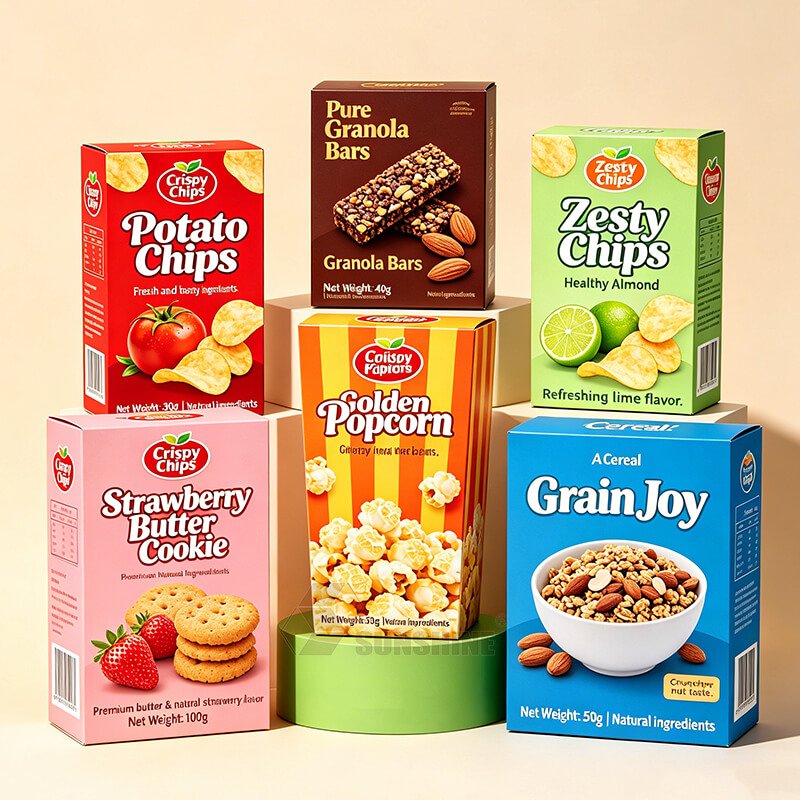
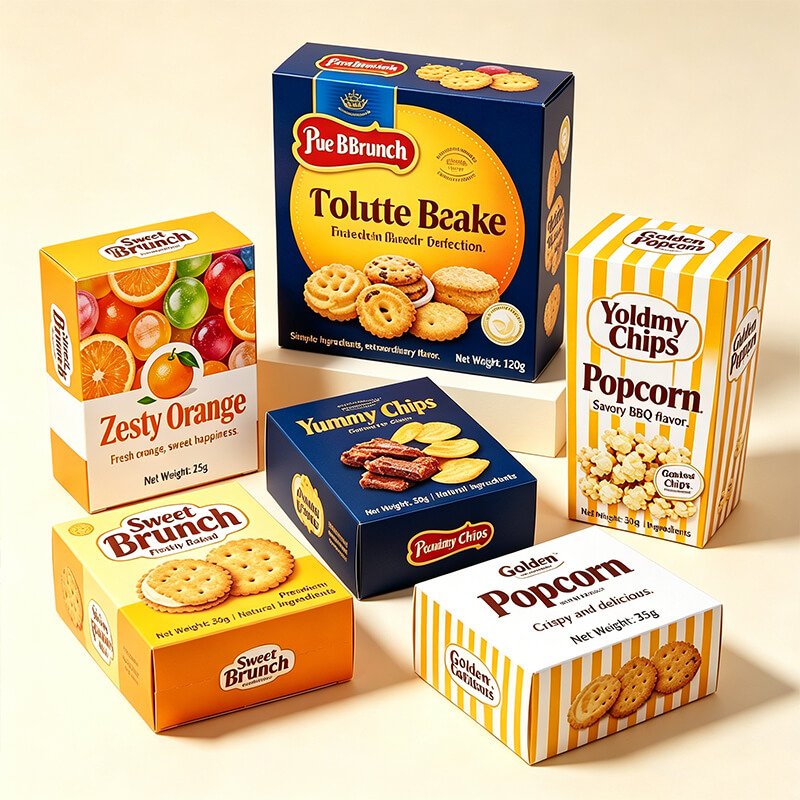
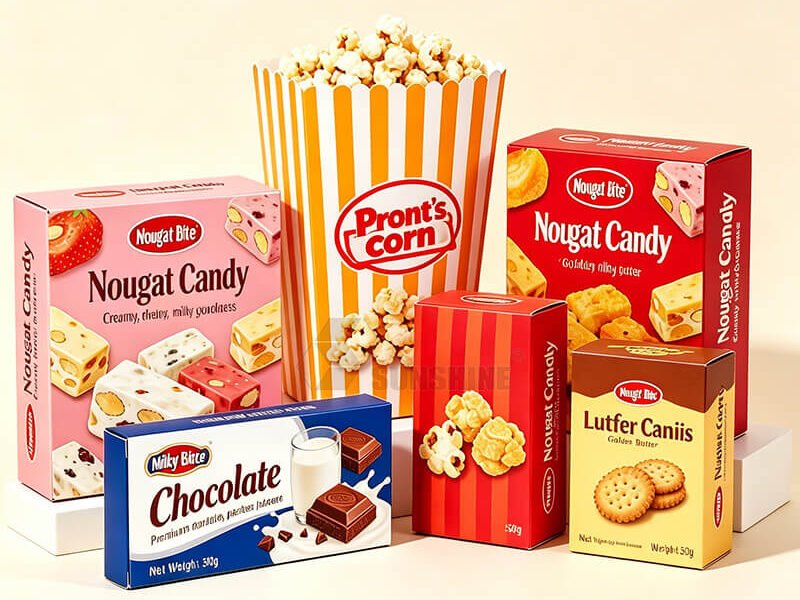
Walk down the biscuit or snack aisle in any supermarket, and you’ll see hundreds of products competing for attention. Butter cookies in elegant cartons, chocolate biscuits in family packs, protein bars in compact sleeves, baked chips in colorful boxes—many share similar ingredients, yet their packaging is completely different.
That difference isn’t simply about branding.
It reflects how each product is manufactured, transported, displayed, and ultimately purchased.
Over the years, we’ve worked with food manufacturers, private label producers, and packaging distributors supplying retailers across Europe and North America. One question comes up surprisingly often during packaging discussions:
“What’s the best packaging for cookies and snack foods?”
It’s a reasonable question, but the answer is rarely straightforward.
The best packaging isn’t necessarily the most expensive, the thickest, or the one with the most premium finish. It’s the packaging that protects the product throughout the supply chain, fits the production process, supports the brand’s positioning, and remains cost-effective at scale.
Choosing the right packaging starts with understanding the product—not the box.
Why Cookie and Snack Packaging Is More Complex Than Many Buyers Expect
Cookies, biscuits, crackers, granola bars, baked snacks, and confectionery are often grouped into the same product category. From a packaging perspective, however, they behave very differently.
A butter cookie is sensitive to breakage.
A chocolate-coated biscuit is vulnerable to heat and grease migration.
A baked cracker quickly loses its crispness if moisture enters the package.
Protein bars may require excellent print quality because most purchasing decisions happen directly on retail shelves.
Even products with similar dimensions can require completely different packaging specifications.
One mistake we often see is buyers using an existing package as the starting point for a new product. While reusing a successful design may reduce development time, it doesn’t always account for differences in weight, shelf life, transportation conditions, or filling methods.
During one quotation discussion with a European snack producer, the customer planned to use the same folding carton for two biscuit ranges. After reviewing the product weights and pallet configuration, we suggested adjusting the box structure rather than simply increasing the paperboard thickness. The modified design improved stacking performance while using the same material grade, helping reduce unnecessary material costs.
Sometimes the better solution isn’t using more material—it’s using the right structure.
Start with the Product Before Choosing the Packaging
Before comparing paper grades or printing finishes, it’s worth asking a few practical questions.
- Is the product fragile or resistant to impact?
- Does it contain butter, chocolate, or oil that may affect packaging performance?
- Will it be packed manually or on a fully automated production line?
- Will it be displayed individually or inside a retail-ready display tray?
- Does it need a long shelf life or only short-term retail protection?
- Is the product sold locally or exported internationally?
These questions often determine the packaging specification long before material selection begins.
For example, export products typically experience more handling, longer storage periods, and wider temperature fluctuations than products distributed within a single country. Packaging that performs well in domestic logistics may require additional moisture protection or structural reinforcement for overseas shipments.
Experienced buyers usually begin by defining the supply chain requirements first, then selecting materials that meet those needs.
Different Snack Products Require Different Packaging Strategies
Although cookies, biscuits, and snack foods are frequently displayed together, their packaging priorities are rarely the same.
Cookies
Cookies tend to be fragile and easily damaged during transportation. Structural strength is often more important than decorative finishing.
Many premium cookie brands also place considerable emphasis on shelf appearance, especially for gift packaging or seasonal promotions.
Common packaging options include:
- Folding carton boxes
- Window boxes
- Rigid gift boxes
- Sleeve and tray combinations
The choice depends largely on retail positioning rather than the product itself.
Biscuits
Biscuits are typically sold in larger production volumes and require packaging that supports efficient manufacturing.
Cost control, production speed, and stacking performance usually become higher priorities than elaborate finishes.
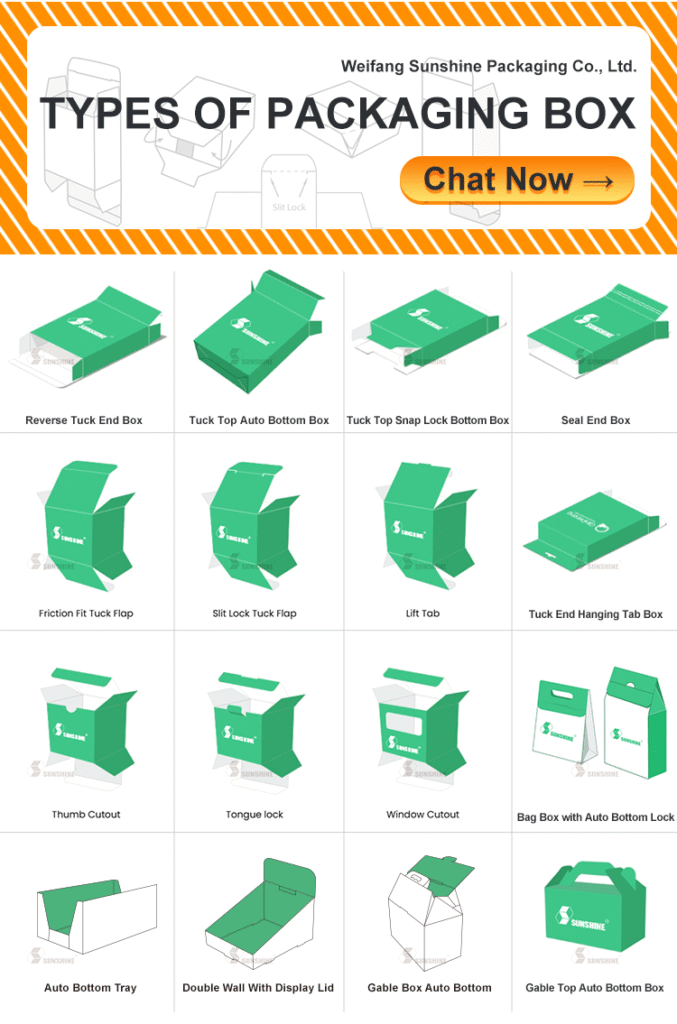
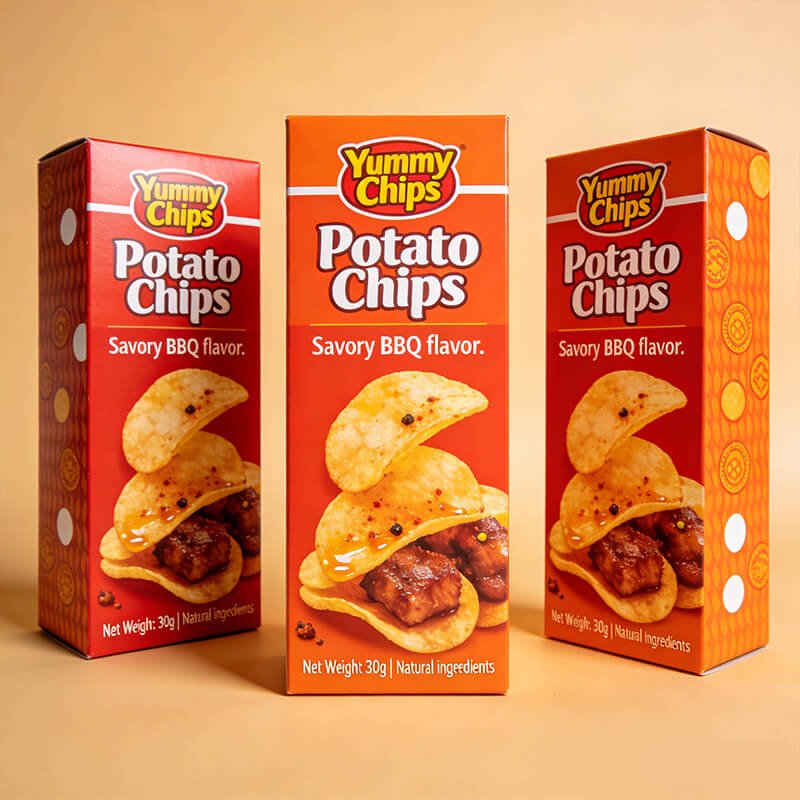
Reverse tuck end cartons remain one of the most widely used structures because they balance production efficiency with reliable protection.
For family packs or multipacks, auto-lock bottom cartons may offer additional strength without significantly increasing production costs.
Snack Foods
The snack food category is much broader, covering products such as chips, crackers, popcorn, cereal bars, nuts, dried fruit, and baked snacks.
Each presents different packaging challenges.
Oily snacks may require grease-resistant coatings.
High-fat products can benefit from barrier materials that help preserve freshness.
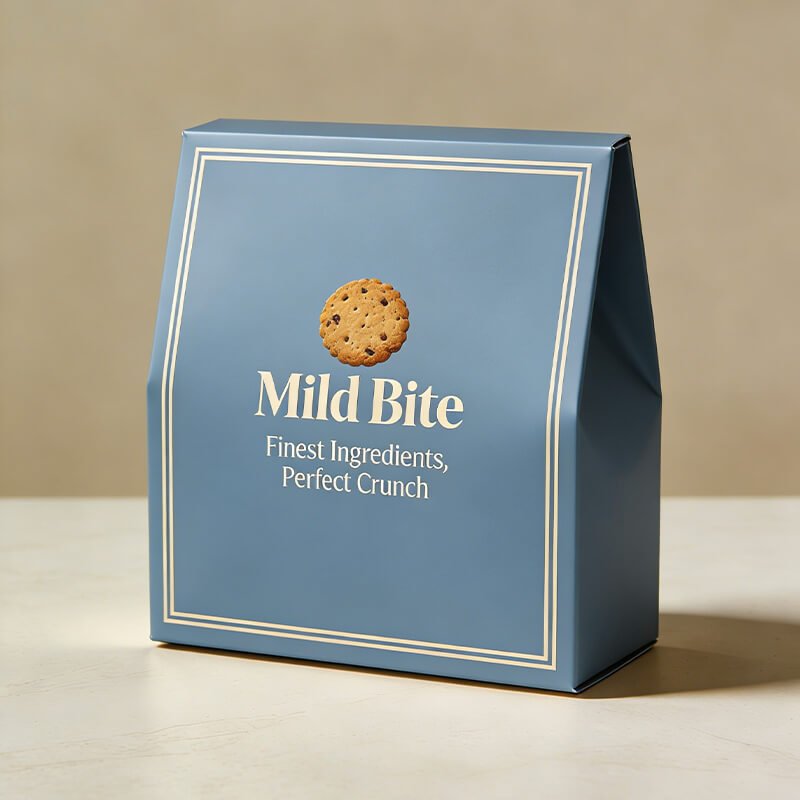
Premium healthy snacks often use minimalist packaging designs with natural-looking paperboard to reinforce sustainability messaging.
Rather than asking, “What packaging is used for snacks?” buyers often achieve better results by asking, “What does this specific snack require during production, transport, and retail display?”
That shift in thinking usually leads to better packaging decisions.
Common Folding Carton Structures Used for Cookies and Snacks
Despite the wide variety of snack products available, several folding carton structures dominate commercial production because they balance cost, efficiency, and shelf presentation.
Reverse Tuck End (RTE)
One of the most economical options for high-volume production.
Suitable for:
- Cookies
- Crackers
- Biscuits
- Granola bars
- Small snack packs
Its simple construction allows efficient automatic packing while keeping die-cutting costs relatively low.
Straight Tuck End (STE)
Often selected when front-panel graphics need better alignment.
Although slightly more expensive than RTE cartons, it creates a cleaner appearance for premium retail packaging.
Auto Bottom Cartons
Designed for heavier products or multipacks.
These structures arrive flat but automatically form a reinforced base during assembly, reducing manual labor on packaging lines while increasing load capacity.
Sleeve Packaging
Sleeves are commonly used for premium biscuits, cookie trays, or seasonal gift packs.
Since the product tray carries most of the weight, the sleeve functions primarily as a branding surface, offering greater design flexibility without requiring a complex box structure.
Window packaging (high conversion shelf packaging)
Often used when brands want to improve shelf visibility.
Common buyer searches:
- cookie packaging boxes with transparent window wholesale
- snack packaging design for retail shelf visibility
Why brands choose it:
- Builds instant trust
- Increases impulse purchase rate
- Makes product more “real” on shelf
Corrugated packaging (for e-commerce & subscription snacks)
Very important for modern snack brands selling online.
Typical B2B keywords:
- corrugated snack subscription box manufacturer
- custom e-commerce cookie shipping boxes supplier
Why it matters:
- Prevents crushing during logistics
- Supports DTC snack box business models
- Suitable for long-distance shipping
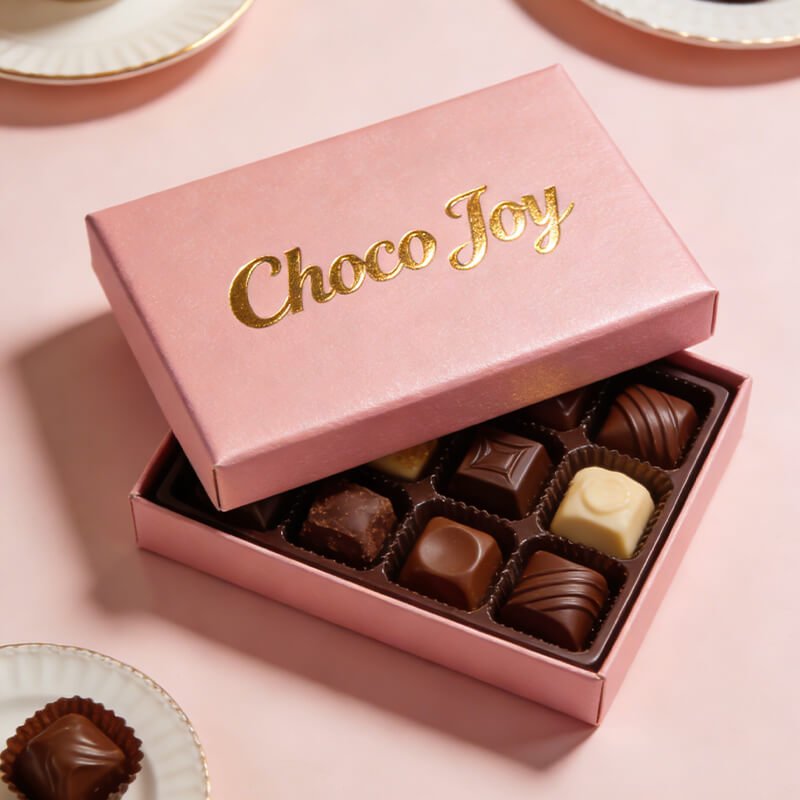
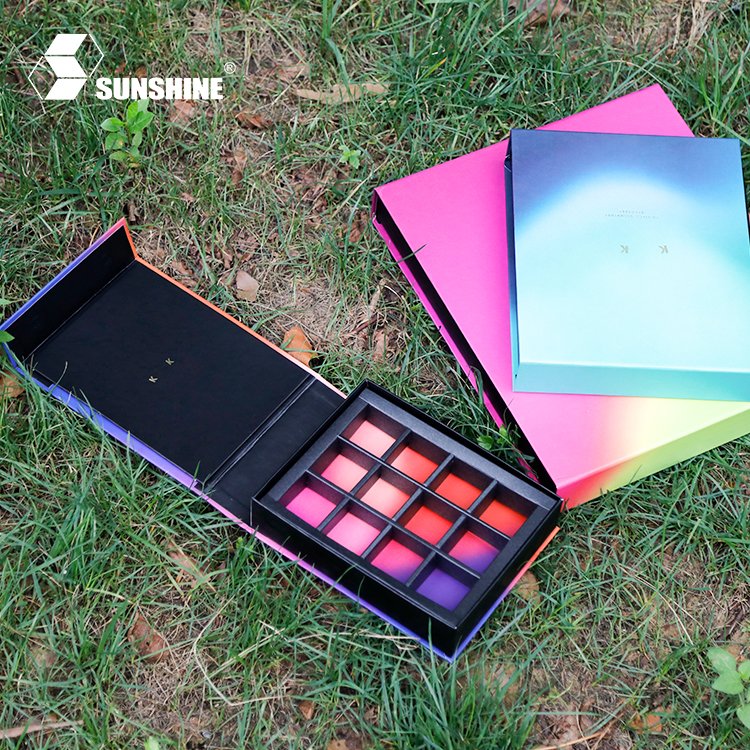
Rigid boxes (premium snack packaging)
Used for higher-end positioning.
Search intent keywords:
- luxury cookie gift packaging boxes custom manufacturer
- premium biscuit packaging boxes supplier
Choosing the Right Materials, Printing Methods, and Packaging Specifications
By the time a packaging project reaches the quotation stage, most buyers already have a preferred box style and approximate dimensions. The next decisions—paperboard, coating, printing, and finishing—often have the biggest impact on both product performance and overall cost.
It’s also the stage where assumptions can become expensive.
We’ve seen projects where brands requested a heavier paperboard because they wanted the box to “feel more premium.” After reviewing the application, it became clear that upgrading the board weight wouldn’t solve the actual problem. The cartons were being stored in humid warehouses before distribution, so moisture resistance—not stiffness—was the issue.
Understanding how each material performs in real supply chain conditions usually leads to better purchasing decisions than simply comparing specifications on paper.
Choosing the Right Paperboard for Cookies and Snack Foods
Paperboard is the foundation of every folding carton, but there isn’t a single material that’s ideal for every product.
The right choice depends on the product itself, its retail positioning, transportation conditions, and budget.
SBS (Solid Bleached Sulfate)
SBS remains one of the most widely used paperboards for premium food packaging.
Its smooth, bright white surface delivers excellent print quality, making it suitable for brands that rely on vibrant graphics or premium shelf presentation.
Typical applications include:
- Premium cookies
- Chocolate biscuits
- Gift packs
- Seasonal promotional packaging
- High-end snack products
Because of its clean appearance, SBS is often chosen by brands that want consistent color reproduction across multiple SKUs.
However, it’s not automatically the best option for every project. If packaging cost is the primary concern, other materials may provide better value.
FBB (Folding Boxboard)
FBB is widely used throughout Europe and has become a popular choice for mainstream biscuit and snack packaging.
Compared with SBS, it offers an excellent balance between stiffness and weight, allowing manufacturers to reduce material usage without sacrificing structural performance.
Many supermarket private-label products use FBB because it delivers reliable print quality while helping control packaging costs.
For products shipped in large volumes, that difference can become significant over an entire production run.
Kraft Paperboard
Natural kraft paperboard has become increasingly popular among brands focusing on organic, healthy, or environmentally conscious products.
The unbleached appearance communicates sustainability without requiring additional messaging.
It’s commonly used for:
- Organic cookies
- Granola products
- Healthy snacks
- Plant-based food brands
- Natural food retailers
That said, kraft isn’t suitable for every design.
Highly detailed graphics or photographs generally reproduce better on white-coated paperboards.
The material should support the brand identity rather than dictate it.
Barrier-Coated Paperboard
Some snack foods require more than structural protection.
Products containing butter, chocolate, oil, or other fats may need additional barrier properties to maintain package appearance and product quality.
Barrier coatings can help improve resistance to:
- Moisture
- Grease
- Oil migration
- Surface staining
One misconception is that barrier packaging is only necessary for frozen or refrigerated foods.
In reality, many ambient snack products benefit from moisture-resistant coatings, particularly when exported to regions with high humidity.
Matching Materials to Different Snack Categories
Rather than choosing paperboard based on price alone, many procurement teams evaluate packaging according to product characteristics.
For example:
| Product | Packaging Priority |
|---|---|
| Butter cookies | Crush resistance and premium appearance |
| Chocolate biscuits | Grease resistance and attractive printing |
| Crackers | Moisture protection |
| Granola bars | Shelf visibility and efficient carton packing |
| Popcorn | Lightweight packaging and retail branding |
| Mixed snack assortments | Strong structure for heavier contents |
This approach usually produces better long-term results than applying the same specification across every product line.
Printing Is More Than Decoration
Packaging graphics often receive the most attention during product development, but printing affects far more than visual appeal.
The printing method influences production efficiency, color consistency, lead time, and manufacturing cost.
Offset Printing
Offset printing remains the preferred solution for most folding carton production.
Its advantages include:
- High-resolution graphics
- Excellent color consistency
- Cost efficiency for medium and large production runs
- Suitable for food-grade packaging inks
For brands managing multiple product variations, offset printing provides consistent branding across different SKUs.
Flexographic Printing
Although more common for corrugated packaging and flexible materials, flexographic printing can also be used for certain paper packaging applications where very large production volumes justify the setup costs.
Digital Printing
Digital printing is becoming more common for market testing, promotional campaigns, and limited editions.
It offers flexibility for smaller quantities without requiring traditional printing plates.
However, for large-scale commercial production, offset printing generally remains the more economical option.
Finishing Techniques That Add Value
Decorative finishes should support the product—not overwhelm it.
Over the years, we’ve noticed that many successful retail packages rely on one or two well-executed finishing techniques rather than combining every available option.
Popular finishing methods include:
Matte Lamination
Creates a refined appearance while reducing glare.
Frequently used for premium cookie brands and artisan snack products.
Gloss Lamination
Enhances color vibrancy and provides additional surface protection.
Often selected for family-oriented snack products with bright, colorful graphics.
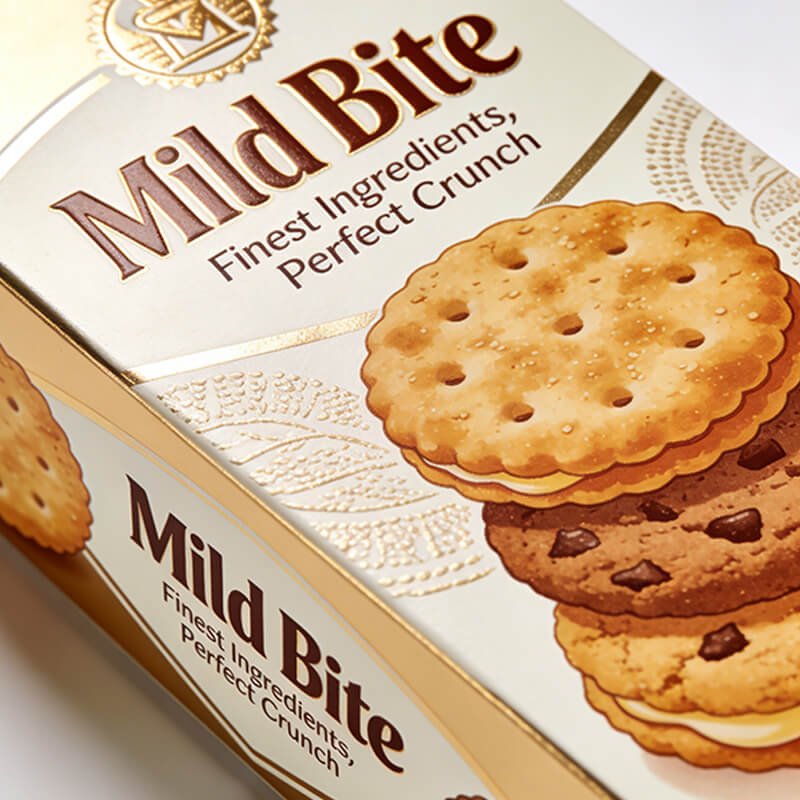
Foil Stamping
Gold, silver, or holographic foil can highlight logos or key branding elements.
Used selectively, foil creates a premium impression without dramatically increasing production complexity.
Spot UV
Spot UV applies a glossy finish to selected design elements while leaving the surrounding surface matte.
It adds visual contrast and helps emphasize logos or product images.
Embossing and Debossing
Adding texture through raised or recessed graphics can strengthen brand recognition, particularly for premium biscuits or gift packaging.
However, these processes should complement the design rather than become the design itself.
Food Safety and Compliance in International Markets
For brands exporting internationally, packaging compliance is just as important as structural performance.
Requirements differ across regions, but procurement teams should verify material compliance early in the sourcing process rather than after artwork approval.
United States
Packaging intended for food contact should comply with applicable FDA food-contact regulations.
Many importers also request supporting documentation demonstrating material suitability.
European Union
The EU has some of the world’s most comprehensive food packaging regulations.
Buyers commonly request compliance with food-contact material requirements, along with documentation covering material traceability and chemical safety.
Increasing attention is also being given to recyclability and the reduction of unnecessary plastic components.
United Kingdom
Although many requirements remain similar to those in the European Union, UK buyers typically expect suppliers to understand local food-contact regulations and provide appropriate compliance documentation.
Australia and New Zealand
Retailers increasingly prioritize recyclable packaging and materials suitable for food-contact applications.
Clear documentation often simplifies the import approval process.
Japan
Japanese food packaging standards place strong emphasis on product safety, manufacturing consistency, and high-quality presentation.
Packaging quality expectations are generally among the highest in the global market.
Middle East
Packaging specifications vary by importer and destination country.
In addition to food safety documentation, buyers may request certifications related to sustainability, product traceability, or regional labeling requirements.
Understanding these expectations before production begins helps avoid unnecessary delays during customs clearance.orders.
Balancing Cost Without Sacrificing Performance
Packaging cost is influenced by far more than the price of paperboard.
The total cost typically includes:
- Material selection
- Printing method
- Finishing processes
- Box structure
- Tooling
- Production volume
- Packing efficiency
- Shipping configuration
Many buyers initially focus on reducing material costs.
In practice, we’ve found that structural optimization often delivers greater savings.
For example, redesigning a carton to improve nesting efficiency or reduce production waste may lower the overall unit cost without changing the paperboard at all.
Similarly, simplifying a finishing specification—from multiple decorative effects to one carefully chosen premium finish—can reduce manufacturing costs while maintaining a strong shelf presence.
The most successful packaging projects rarely begin with the question, “How can we make the box cheaper?”
Instead, they ask, “How can we make the packaging perform better for the same budget?”
That shift in perspective often produces the best long-term value—for both manufacturers and brands.
Common Purchasing Mistakes, Frequently Asked Questions, and Final Thoughts
By the time packaging enters mass production, changing materials or structures becomes both expensive and time-consuming. That’s why experienced procurement teams spend more time evaluating specifications before approving the first sample than they do comparing quotations.
In many projects, the biggest challenges aren’t caused by manufacturing defects. They’re the result of packaging decisions made too early—or based on assumptions rather than real production and logistics conditions.
Below are some of the issues we encounter most often when discussing new cookie and snack packaging projects.
Five Common Mistakes Buyers Make When Choosing Snack Packaging
1. Choosing a Heavier Paperboard Instead of a Better Structure
A thicker board doesn’t automatically mean stronger packaging.
Many buyers assume that increasing the paperboard weight will improve performance during transportation. While higher GSM can increase stiffness, it doesn’t necessarily solve problems such as poor box geometry, inefficient locking mechanisms, or weak load distribution.
We’ve worked on projects where a small structural modification delivered better stacking performance than upgrading to a significantly heavier board.
When evaluating packaging strength, it’s worth looking at the complete carton design rather than the material alone.
2. Ignoring the Supply Chain Environment
Packaging rarely travels directly from the factory to the supermarket shelf.
It may pass through warehouses, distribution centers, shipping containers, and retail stockrooms before reaching consumers.
Each stage introduces different environmental conditions.
Questions worth asking include:
- Will the products be shipped by sea or air?
- How long will they remain in storage?
- Will they be exposed to high humidity or seasonal temperature changes?
- How many layers will be stacked on a pallet?
A carton that performs well in domestic distribution may require additional moisture protection for export markets.
3. Designing Packaging Before Understanding the Filling Process
Packaging should work with the production line—not against it.
Some box styles that look attractive in a design presentation may reduce packing speed or create feeding issues on automated equipment.
During development, it’s useful to involve both the packaging supplier and the production team as early as possible.
Small structural adjustments made before tooling is produced can prevent costly modifications later.
4. Adding Too Many Premium Finishes
Foil stamping, embossing, soft-touch coatings, textured varnishes, and specialty inks can all enhance shelf appeal.
However, combining multiple decorative processes doesn’t always create a better package.
In fact, excessive finishing can increase production costs, extend lead times, and complicate quality control.
Many successful retail brands rely on clean layouts, strong typography, and one carefully selected finishing technique rather than trying to use every available effect.
Sometimes restraint creates a stronger visual impression.
5. Selecting a Supplier Based Only on Unit Price
Price is always an important factor, but it rarely tells the whole story.
A lower quotation may not include:
- Packaging testing
- Color management
- Compliance documentation
- Design optimization
- Production consistency
- Long-term supply capacity
When comparing suppliers, experienced buyers usually look beyond the initial quotation and evaluate the supplier’s ability to deliver consistent quality over multiple production runs.
Packaging is a long-term supply partnership rather than a one-time purchase.
Frequently Asked Questions
What is the best packaging for cookies?
There isn’t a universal solution.
The best packaging depends on factors such as product fragility, shelf life, retail positioning, transportation requirements, and production volume. Folding cartons remain one of the most common choices because they combine product protection, strong branding opportunities, and efficient manufacturing.
What paperboard is commonly used for biscuit packaging?
SBS and FBB are the two materials most frequently used for folding carton packaging.
SBS offers excellent print quality for premium products, while FBB provides a good balance between stiffness, appearance, and cost, making it a popular choice for high-volume retail packaging.
Do cookies need moisture-resistant packaging?
In many cases, yes.
Moisture is one of the primary reasons baked products lose their texture. Depending on the product and distribution environment, barrier coatings or moisture-resistant packaging materials may help maintain product quality throughout storage and transportation.
Can paper packaging be used for oily snack foods?
Yes, provided the packaging is designed for the application.
Grease-resistant coatings and food-grade barrier materials are commonly used for products containing butter, chocolate, or vegetable oils.
Selecting the right coating is generally more effective than simply increasing the paperboard thickness.
Is custom printed snack packaging recyclable?
Most paper-based folding cartons can be recycled through standard paper recycling systems.
However, recyclability may vary depending on the type of lamination, coatings, adhesives, and additional packaging components used.
Many brands are now moving toward mono-material paper packaging or water-based coatings to improve recyclability.
How can packaging costs be reduced without lowering quality?
Cost optimization often comes from improving efficiency rather than removing material.
Possible approaches include:
- Simplifying carton structures
- Standardizing box sizes across product ranges
- Reducing unnecessary finishing processes
- Optimizing sheet layouts to reduce paper waste
- Increasing production quantities where appropriate
These changes can often reduce the total packaging cost while maintaining product performance and visual appeal.
What certifications should a packaging supplier provide?
Requirements vary by market, but buyers commonly request documentation related to food-contact compliance, material traceability, sustainability certifications, and quality management systems.
Discussing certification requirements early in the project helps prevent delays later in production or customs clearance.
Choosing packaging for cookies, biscuits, and snack foods isn’t about finding the most expensive material or the most eye-catching design.
The strongest packaging solutions are usually the result of balancing several practical considerations: product protection, production efficiency, transportation conditions, retail presentation, sustainability goals, and overall cost.
Every snack product has its own requirements. A biscuit designed for supermarket shelves, an organic cookie sold through specialty retailers, and a premium gift assortment may all require completely different packaging strategies—even if they’re manufactured in the same factory.
From our experience, the most successful packaging projects begin with a clear understanding of the product and the supply chain rather than the packaging itself. Once those fundamentals are defined, selecting the right material, box structure, and printing specification becomes a far more straightforward process.
In the end, good packaging doesn’t just protect what’s inside the box. It helps products move efficiently through production, arrive in excellent condition, stand out on the shelf, and support the brand long after the first purchase.