Most snack packaging problems don’t start in production—they start in decision-making
If you’ve ever worked on a snack product launch, you’ll probably recognize this situation:
The design looks good, the sample box looks fine, but once mass production starts, something feels slightly off—cost is higher than expected, the box doesn’t perform well in stacking, or the packaging doesn’t behave consistently in export conditions.
In most cases, the issue is not printing or manufacturing.
It’s the early decisions about material, structure, and cost priorities.
When buyers search for custom snack food packaging boxes, they are usually not just comparing suppliers. They are trying to understand what actually affects performance at scale.
This article breaks down those decisions in a practical way based on real production and export experience.
Snack packaging is a production system, not just a box
A common misunderstanding is treating snack packaging as a design item.
In reality, it behaves more like a small production system that must work across:
- Automated filling lines
- Carton sealing processes
- Pallet stacking and warehouse storage
- Long-distance transportation
- Retail shelf handling
A packaging box that works in one environment may fail in another.
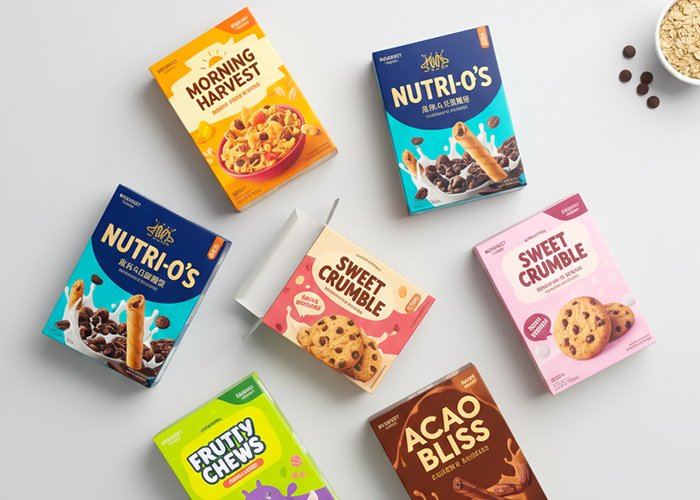
For example, a structure that looks stable in sample form may deform under humidity changes during sea freight. This is especially common in cookie and baked snack packaging.
Why snack products require different packaging logic
Snack food is not a single category—it includes multiple product behaviors.
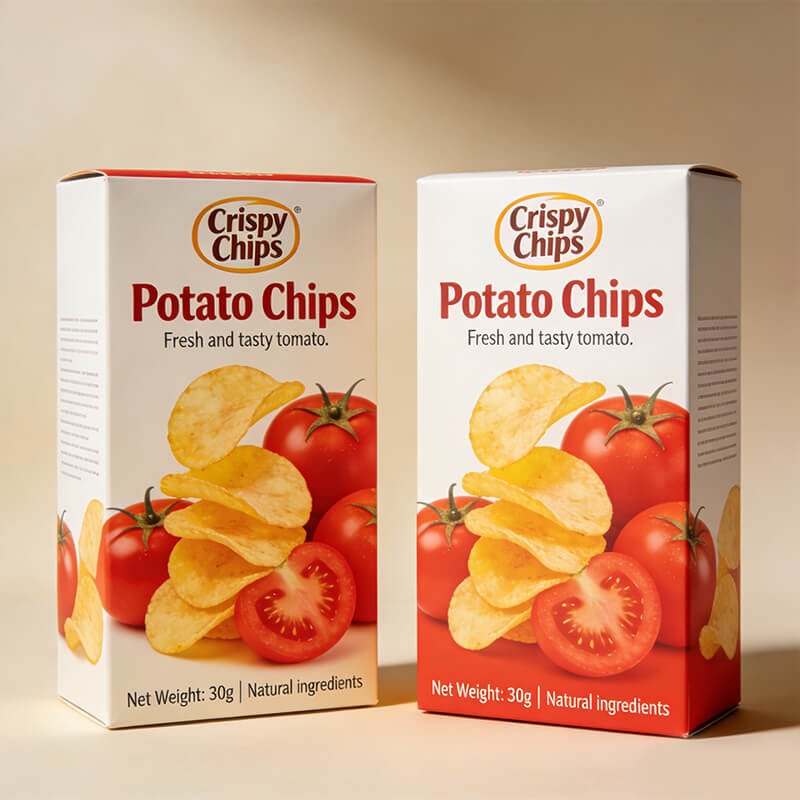
1. Crisp snacks (chips, crackers, cookies)
These products are sensitive to:
- Breakage during transport
- Moisture absorption
- Air pressure inside packaging
Even small structural weaknesses can affect product integrity.
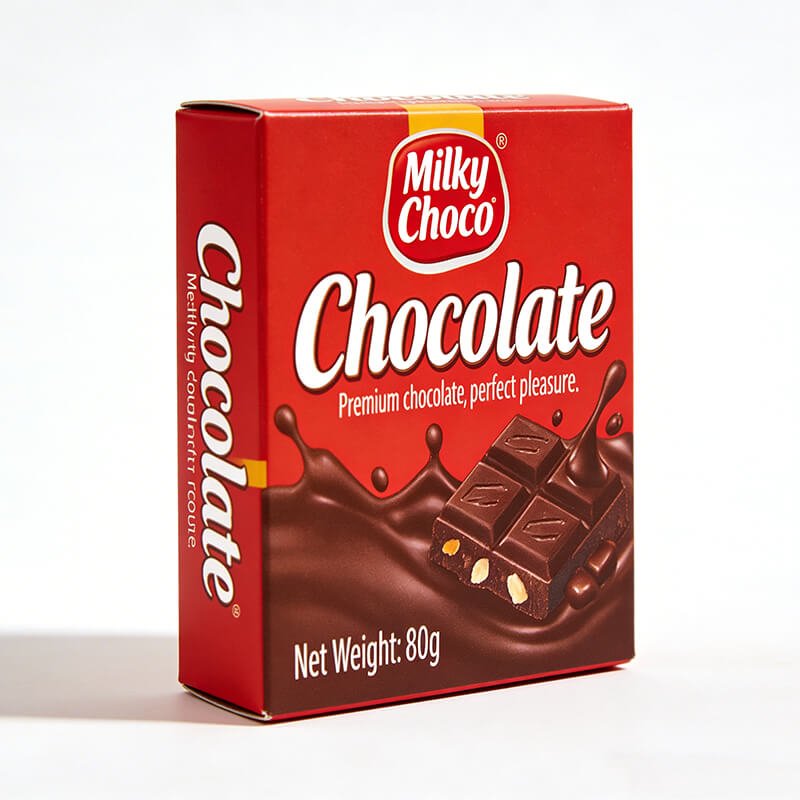
2. Dense snacks (protein bars, granola bars)
These products are more stable physically, but require:
- Tight dimensional control
- Clean shelf presentation
- Strong branding visibility at small size
Packaging here is often more about retail impact than protection.
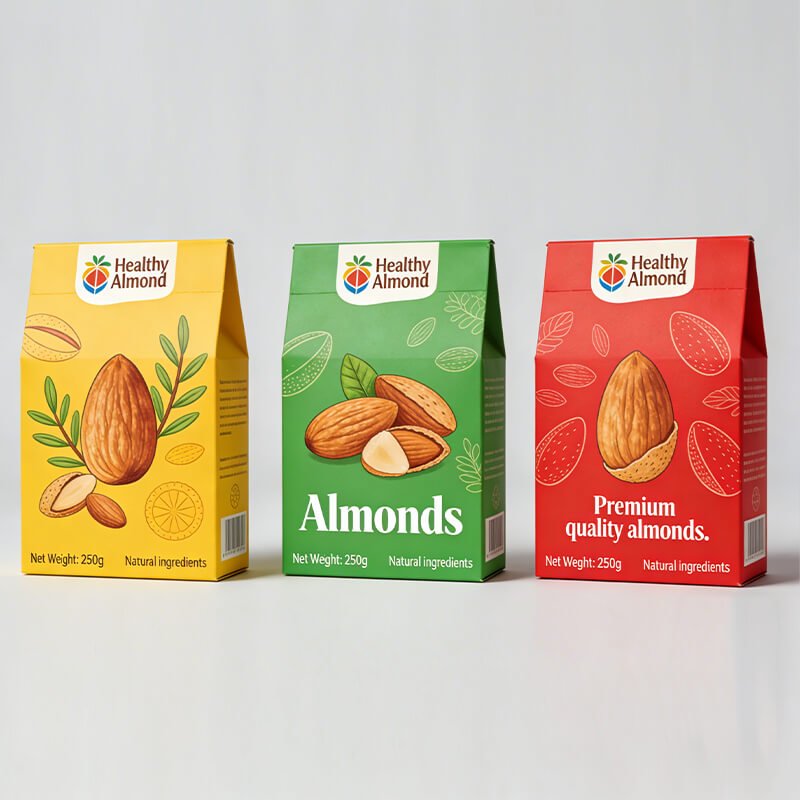
3. Bulk or mixed snacks (nuts, dried fruit blends)
These require:
- Higher structural strength
- Better sealing compatibility
- Internal stability during movement
The packaging must hold weight consistently over time, not just at the point of packing.
Material selection: where performance actually begins
Material choice affects everything downstream—cost, print quality, and durability.
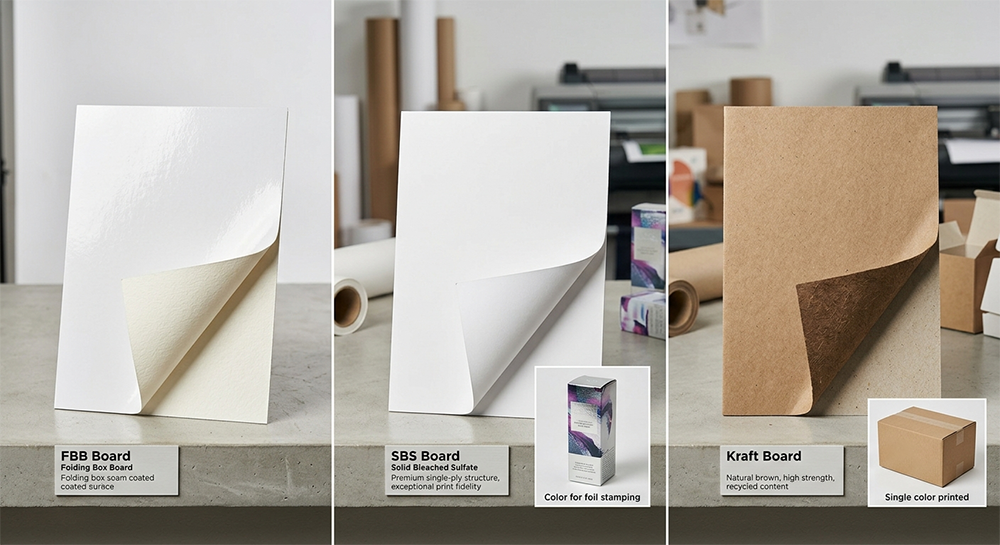
SBS board for premium snack positioning
Solid Bleached Sulfate (SBS)
SBS is often used when brands prioritize visual clarity and premium perception.
In real production projects, it is commonly selected for:
- High-end cookie brands
- Export-oriented snack packaging
- Private label products targeting premium retail chains
Its main advantage is consistency in printing and surface brightness, which supports strong brand presentation on retail shelves.
FBB board as the industrial standard
Folding Boxboard (FBB)
FBB is the most widely used material in snack packaging production.
It is commonly chosen for:
- Medium-scale snack brands
- Supermarket private label products
- High-volume export packaging
What makes FBB practical is not just cost—it is its predictability in mass production. It behaves consistently across large print runs, which is critical for snack brands operating in multiple retail channels.
Kraft board for positioning-driven packaging
Kraft Paperboard
Kraft is less about function and more about brand positioning.
It is often used in:
- Natural snack brands
- Organic product lines
- Clean-label positioning strategies
However, kraft behaves differently in printing and coating processes, which means it requires careful planning for export packaging, especially in humid regions.
Structure decisions are often underestimated in snack packaging
Many buyers focus on printing first, but structure determines real-world performance.
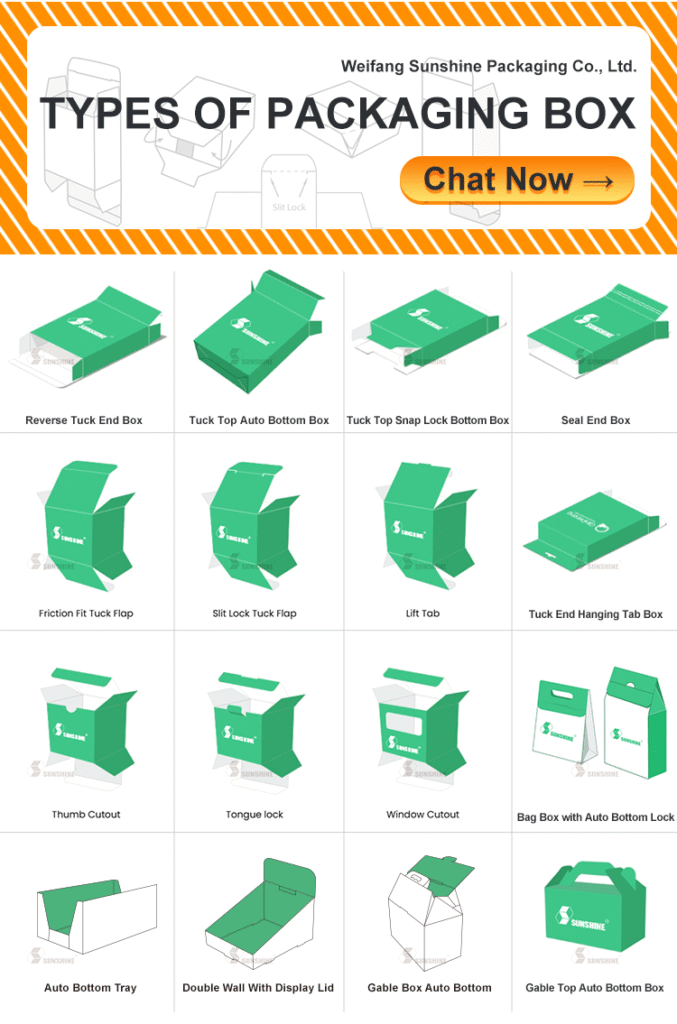
Folding cartons (baseline structure)
Still the most common solution for snack packaging.
Used for:
- Cookies
- Crackers
- Granola bars
- Everyday snack products
The reason it dominates is not design flexibility, but production efficiency. It works well with automated filling systems and keeps unit cost stable at scale.
Auto-lock structures for heavier loads
These are often used when product weight becomes a factor.
Typical use cases:
- Nut-based snacks
- Bulk packaging
- Family-size snack boxes
The key advantage is bottom strength and stacking reliability, especially during pallet transport.
Window structures (controlled visibility)
Used when product appearance is part of the purchase decision.
Common in:
- Cookie packaging
- Premium snack products
- Artisan or handmade brands
However, in EU markets, window material selection is increasingly influenced by recyclability requirements, pushing brands toward paper-based alternatives.
Printing is not just decoration—it is part of structural performance
In snack packaging, printing must survive production stress.
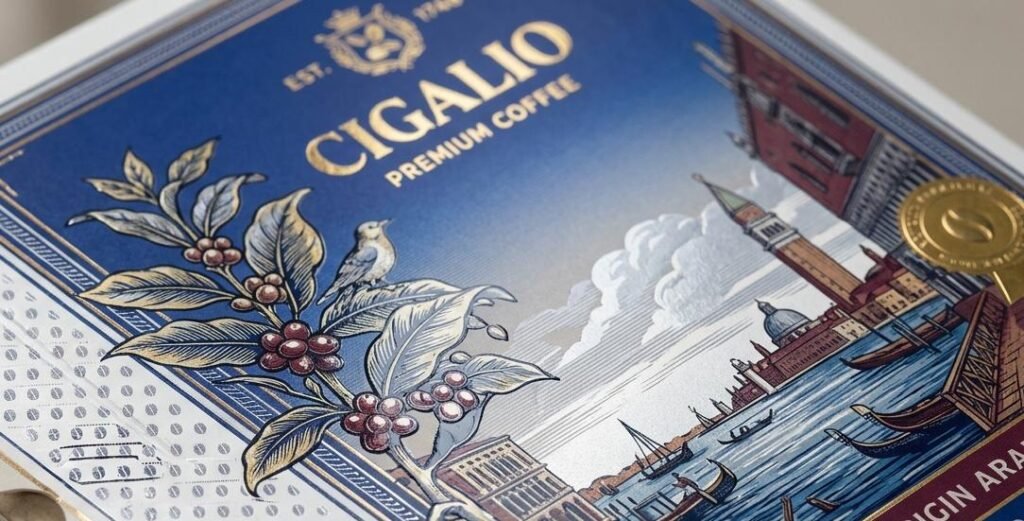
Offset printing for retail packaging
Most widely used method in custom snack packaging manufacturers.
It provides:
- Stable color consistency
- High-speed production compatibility
- Reliable repeat orders
Flexographic printing for secondary packaging
Often used for:
- Corrugated snack display boxes
- Transport packaging
- Retail-ready shelf systems
Digital printing for sampling and small batches
Used mainly in:
- New product development
- Market testing
- Seasonal snack launches
Finishing choices and their real impact
Common options include:
- Matte lamination (premium positioning)
- Gloss lamination (retail visibility)
- Foil stamping (brand emphasis)
- Spot UV (highlighting key elements)
In practice, finishing should support structure, not compensate for weak design decisions.
Cost in snack packaging is driven by hidden variables
Most buyers focus on unit price, but real cost is determined by system-level factors.
1. Material efficiency
Not just type, but how efficiently the board is used in die-cut layout.
2. Structural waste
Complex structures often increase production scrap rate.
3. Finishing intensity
Each additional process adds both cost and production time.
4. Logistics behavior
Poor stacking efficiency increases damage rate, which is a hidden cost.
5. Order stability
Repeat orders reduce setup cost significantly over time.
In many cases, optimizing structure reduces cost more effectively than switching suppliers.
Regional differences in snack packaging expectations
United States
Focus on retail shelf impact and compliance labeling.
European Union
Strong emphasis on recyclability and FSC-certified materials.
United Kingdom
Fast transition toward reduced plastic packaging systems.
Japan
Extremely strict requirements for consistency and precision.
Middle East
High focus on premium appearance and heat resistance during transport.
Common mistakes in snack packaging sourcing
1. Prioritizing design before production feasibility
Visual approval happens too early in many projects.
2. Ignoring export logistics conditions
Packaging that works locally may fail in sea freight environments.
3. Over-complicating finishing
Too many effects increase cost without improving retail performance.
4. Treating all snack products as one category
Different snack behaviors require different packaging logic.
Buyer questions that indicate real purchasing intent
When procurement teams are serious about sourcing custom snack food packaging boxes, their questions usually shift toward:
- Can this run on high-speed filling lines?
- What is the structural failure rate in export conditions?
- Can we optimize cost through material or die-line changes?
- How stable is color consistency across production batches?
- Can you support FSC or compliance documentation?
These are operational questions, not design questions.
Snack packaging is not decided by graphics—it is decided by how well the packaging performs under real production and logistics conditions.
The most reliable projects we’ve seen are not the most visually complex ones. They are the ones where:
- Structure matches product behavior
- Material matches market expectation
- Cost matches production scale
Once these three elements are aligned, packaging becomes predictable—not problematic.
And in large-scale snack supply chains, predictability is often more valuable than design.