
Protein bars have become a familiar product in supermarkets, gyms, convenience stores and online nutrition shops. From high-protein snacks and meal replacement bars to plant-based energy bars, the market continues to offer brands plenty of room to stand out.
But getting a protein bar onto a retail shelf involves more than developing a good recipe. Packaging also plays an important role. It needs to hold the product securely, communicate what makes it different and fit the way retailers display and sell it.
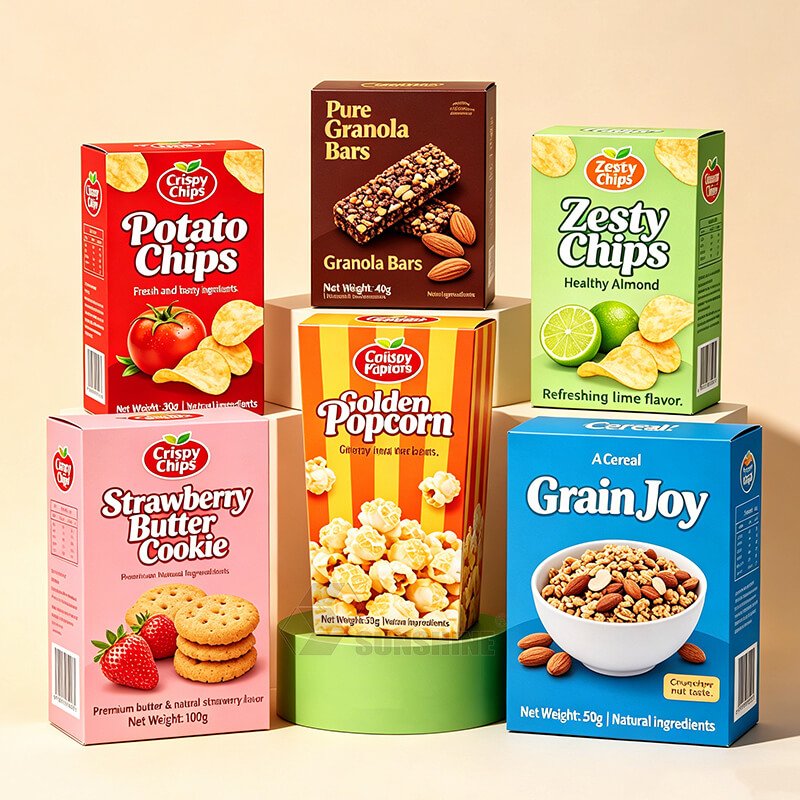
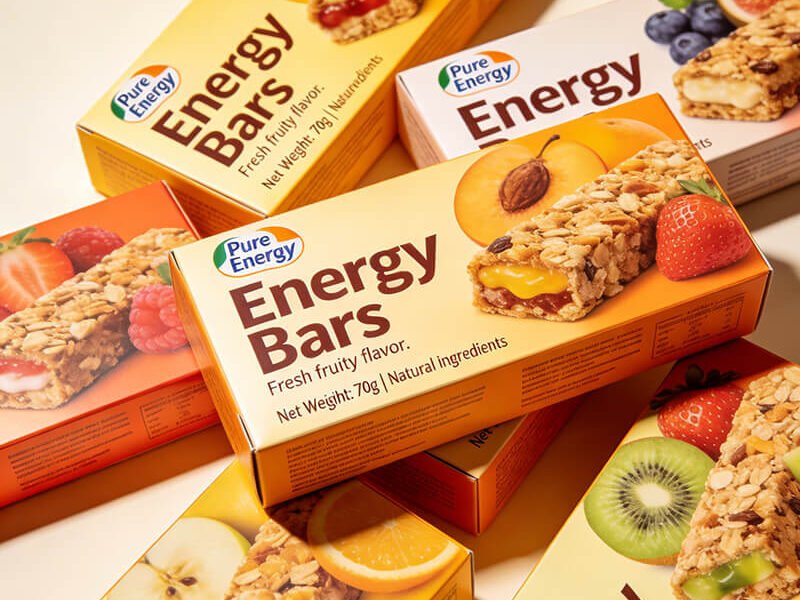
For many brands, custom protein bar packaging boxes are a practical choice, particularly for multi-bar packs and retail cartons containing individually wrapped bars.
If you are planning a new product launch or looking to update your existing packaging, here are some things worth considering before placing an order.
1. Why Do Protein Bar Brands Use Custom Paper Boxes?
Most protein bars are individually wrapped to protect the product and maintain freshness. A paperboard carton is often used as an additional layer around one or more wrapped bars.
This outer carton serves several purposes.
Product presentation
A printed carton gives brands more room to communicate product information, display their logo and create a consistent visual identity across different flavours.
Multi-pack organization
For brands selling packs of 4, 6, 8 or 12 bars, a folding carton keeps individual products together in one retail-ready package.
Shelf presentation
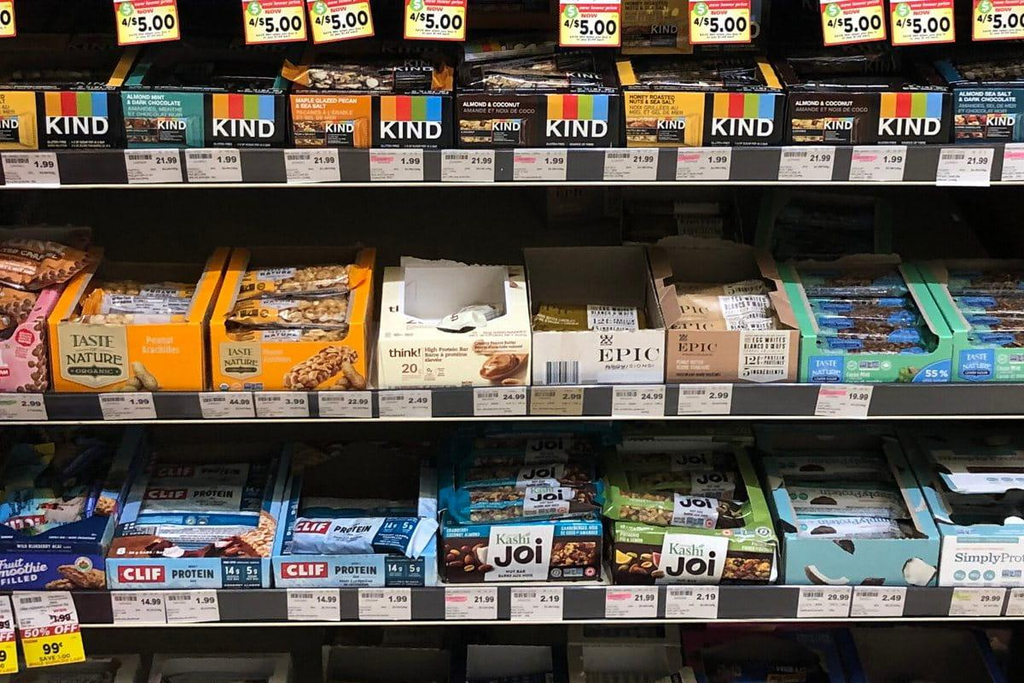
A well-designed carton helps products look organized on supermarket shelves. It also gives retailers a clear product-facing surface for displaying key information.
Brand consistency
When a brand offers several flavours or product variations, custom printed cartons make it easier to maintain a consistent packaging style while distinguishing each SKU.
For these reasons, paperboard cartons are commonly used for retail protein bar multipacks, nutrition bars and other individually wrapped snack products.
2. Choosing the Right Paperboard for Protein Bar Packaging
The paperboard you choose affects the appearance, stiffness, printing quality and overall performance of the carton.
There is no single material that works for every protein bar product. The right choice depends on the carton size, number of bars, packaging weight, retail requirements and budget.
Here are three commonly considered options.
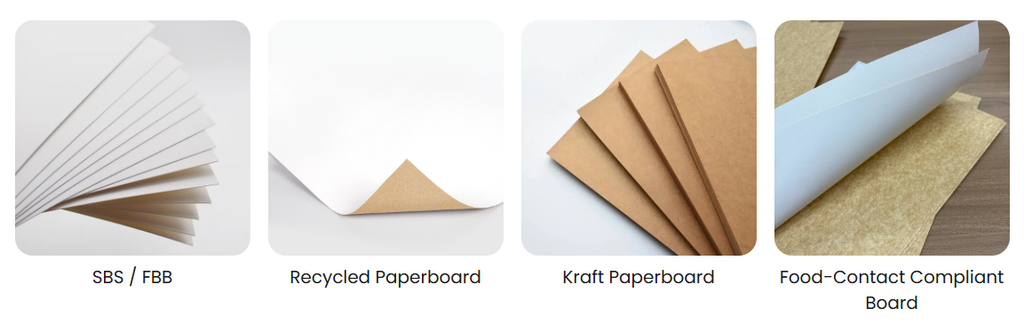
SBS Paperboard
Solid Bleached Sulfate (SBS) is a white paperboard with a smooth surface that provides a good base for high-quality printing.
It is a suitable option for brands that want clean product images, bright colours and detailed graphics.
SBS is often considered for premium nutrition products and retail cartons where appearance is a priority.
FBB Paperboard
Folding Box Board (FBB) is widely used for folding carton applications. It combines a printable surface with a lightweight structure and good stiffness for its weight.
For protein bar multipacks, FBB can be a practical choice when brands need a balance between appearance, carton strength and material cost.
Recycled Paperboard
Recycled paperboard may be worth considering for brands looking to incorporate recycled materials into their packaging.
Its appearance and surface characteristics can differ from virgin-fibre boards, so it is important to review actual material samples before making a decision.
The choice should also take into account the intended printing process and any applicable packaging requirements in the destination market.
A practical point: If the protein bars are individually wrapped, the outer paperboard carton does not replace the primary wrapper’s barrier function. Moisture, oxygen and freshness protection must be addressed by the primary packaging.
3. Which Box Style Works Best for Protein Bars?
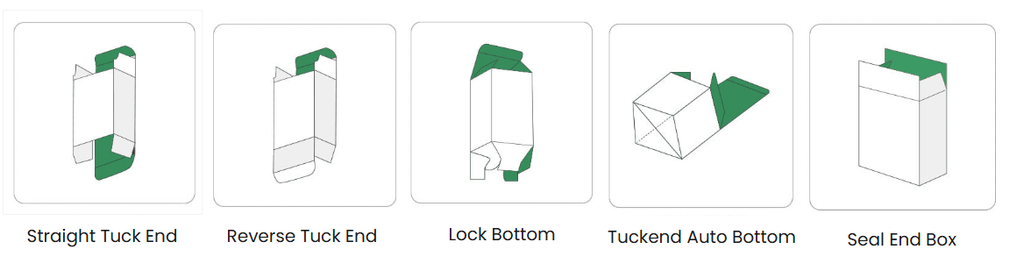
The best carton structure depends mainly on how many bars are packed together and how the finished product will be displayed.
Some common options include:
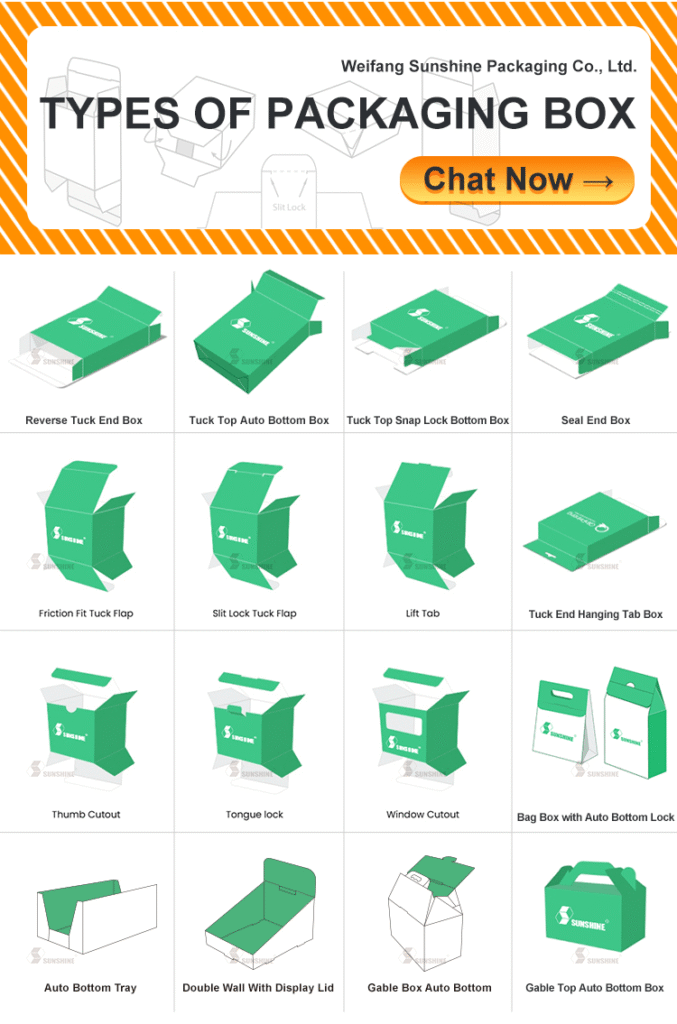
Straight Tuck End Boxes
Straight tuck end cartons have top and bottom closure flaps that tuck in the same direction.
They offer a clean appearance and are commonly used for smaller retail cartons. The design can also provide a relatively uninterrupted front panel for branding.
Reverse Tuck End Boxes
Reverse tuck end cartons have closure flaps that tuck in opposite directions.
They are a widely used folding carton structure and can be suitable for lightweight protein bar multipacks.
The final choice should be based on the dimensions, board specification and filling method.
Auto-Lock Bottom Boxes
For cartons that need additional bottom support, an auto-lock bottom structure may be worth considering.
This style has a pre-glued base that forms when the carton is opened. It can be useful for certain heavier retail packs, although the added structure may affect production cost and storage requirements.
Display-Ready Cartons
Some protein bar brands sell products through supermarkets, gyms and convenience stores where shelf presentation matters.
In these cases, a carton may be designed with a perforated opening or display feature so the product can be presented more conveniently.
The design needs to work both as a shipping or retail carton and as an in-store display package.
Not every product needs a complicated structure. For many standard multipacks, a well-designed folding carton is more than sufficient.
4. How to Choose the Right Size for Protein Bar Boxes
Getting the dimensions right is one of the most important parts of a custom packaging order.
A carton that is too tight can make packing difficult or put unnecessary pressure on the individual wrappers. One that is too large may allow the bars to move around during handling.
Before requesting a quotation, prepare the following information:
- Individual protein bar length, width and height.
- Number of bars per carton.
- Arrangement of the bars inside the box.
- Thickness of the individual wrappers.
- Whether the bars are placed flat, upright or in multiple rows.
For example, a six-bar carton arranged in two rows of three will require a different internal layout from a six-bar carton stacked in one column.
The dimensions of the finished carton should be calculated around the actual wrapped products, not just the dimensions of an unwrapped bar.
It is always better to make a physical sample and test the fit before approving mass production.
5. What Should Be Printed on a Protein Bar Packaging Box?
Protein bar packaging usually needs to communicate product information quickly. Shoppers often compare several products within a short time, so the front panel should make the main selling points easy to understand.
Depending on the product and applicable market regulations, the carton may include:
- Brand name and logo.
- Product name and flavour.
- Net quantity and number of bars.
- Protein content or other nutritional claims.
- Nutrition facts or nutrition declaration.
- Ingredient and allergen information.
- Storage instructions.
- Barcode.
- Manufacturer or distributor details.
- Required recycling and disposal information.
Some information may be printed on the individual wrappers rather than repeated in full on the outer carton. This depends on the product configuration and local labelling rules.
For brands selling in the US, UK or EU, it is important to have the final artwork reviewed against the relevant food labelling requirements before printing.
A packaging manufacturer can help prepare the artwork layout and check the printable area, but the brand owner remains responsible for the accuracy and regulatory compliance of the product information.
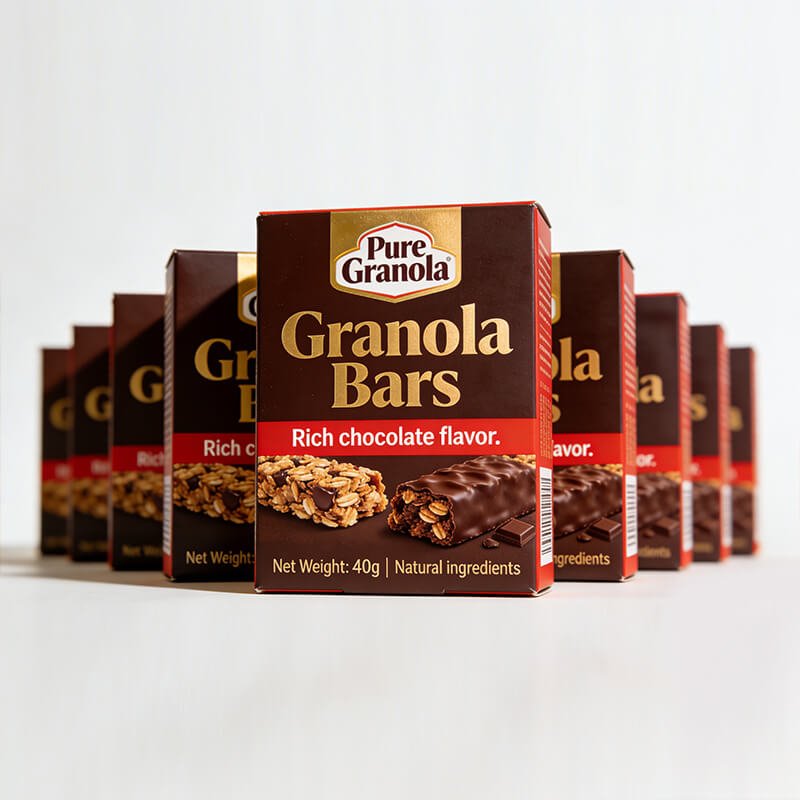
6. How to Make Your Protein Bar Packaging Stand Out on Retail Shelves
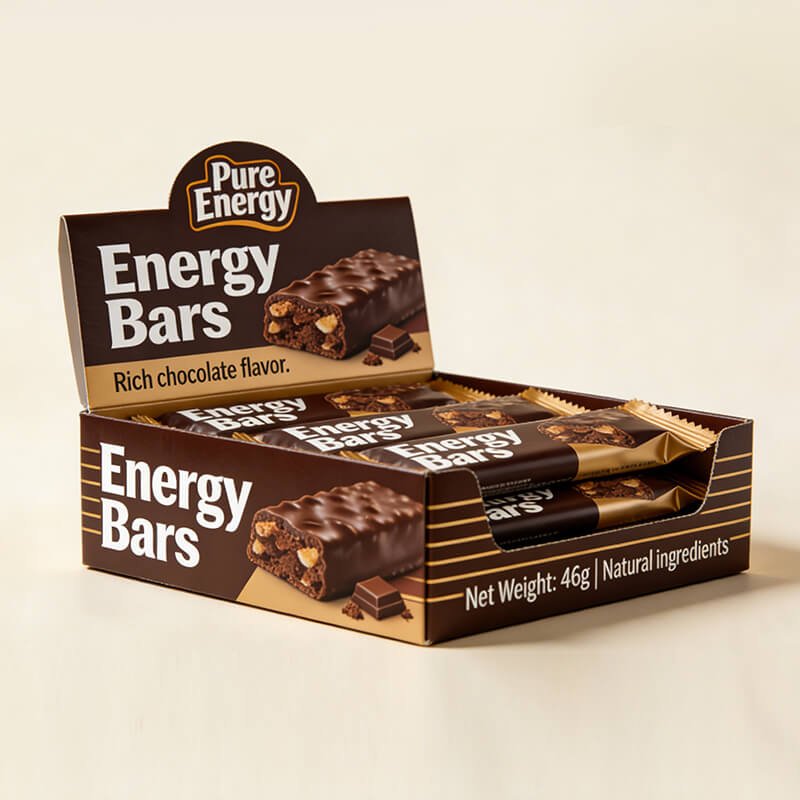
Protein bars are often displayed alongside products with similar ingredients and nutritional claims. Packaging design is one of the ways brands can make their products easier to recognize.
A few details can make a noticeable difference.
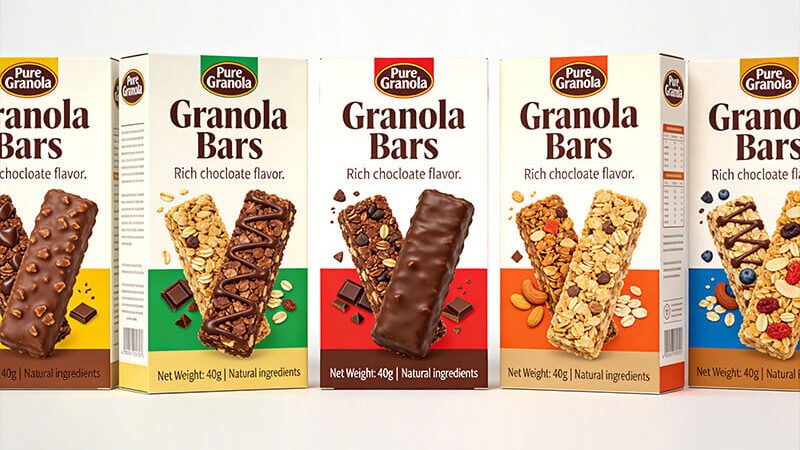
Use colour to distinguish flavours
If your range includes chocolate, peanut butter, berry and vanilla flavours, consider assigning each one a distinct colour while keeping the overall design consistent.
Keep the main message clear
Avoid filling every available space with text. The brand name, product type and most important product feature should be easy to find.
Choose finishes that suit your brand
Different printing and finishing options can create different impressions.
- Matt lamination gives the carton a smooth, understated appearance.
- Gloss lamination creates a brighter surface.
- Hot foil stamping adds metallic details to selected areas.
- Embossing creates raised elements that can add texture.
These finishes do not all need to be used together. Often, one or two carefully chosen details are enough.
Think about the whole product range
If you plan to introduce more flavours or pack sizes later, establish a consistent carton layout from the beginning. This makes future packaging updates easier and helps products look like part of the same brand family.

7. What Affects the Cost of Custom Protein Bar Packaging Boxes?
There is no fixed price for a custom protein bar carton. Two boxes with similar dimensions can have different costs depending on their materials, structure and production requirements.
The main factors include:
Paperboard type and thickness
Different paperboard grades and thicknesses have different material costs. Larger cartons or heavier board specifications will generally use more material.
Carton dimensions
The size of the unfolded carton affects how much paperboard is required and how efficiently it can be arranged during production.
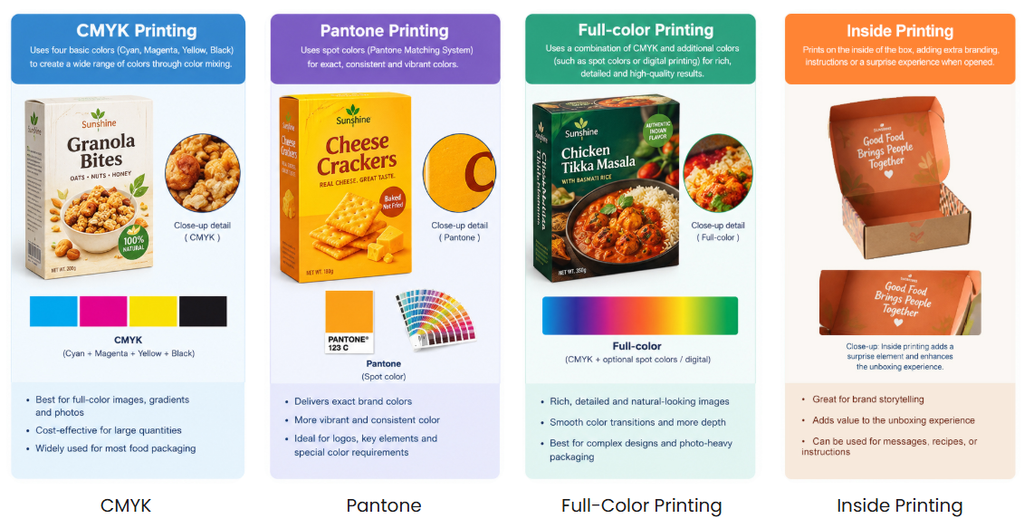
Printing colours
Full-colour offset printing is commonly used for retail folding cartons. Special colours and additional printing requirements may affect the quotation.
Surface finishing
Lamination, hot foil stamping, embossing and other finishing processes add extra production steps.

Order quantity
The production quantity affects material purchasing, machine setup and overall unit cost. Larger orders can often spread fixed setup costs across more cartons.
Carton structure
A standard tuck-end carton and a more complicated structure may require different tooling and production processes.
When requesting a quotation, provide the same specifications to each supplier. This makes it easier to compare prices fairly rather than comparing different materials or carton designs.
8. What Should You Prepare Before Ordering Custom Protein Bar Boxes?
A clear specification helps a packaging manufacturer understand your requirements and provide a more accurate quotation.
Before contacting suppliers, it is useful to prepare:
| Information | What to Provide |
|---|---|
| Product | Protein bar, energy bar or nutrition bar |
| Pack quantity | 4, 6, 8, 12 bars, etc. |
| Box dimensions | Length × Width × Height |
| Material | Preferred paperboard, if known |
| Printing | Full-colour printing or specific brand colours |
| Finishing | Matt, gloss, foil stamping or embossing |
| Order quantity | Estimated quantity per size or design |
| Destination | Country or market where the product will be sold |
| Artwork | Print-ready artwork or reference design |
You do not need to know every technical detail before contacting a manufacturer.
If you are unsure about the paperboard or carton structure, share your product dimensions and intended use first. An experienced packaging supplier can help you evaluate suitable options.
9. Why Work with a Custom Folding Carton Manufacturer?
Working directly with a folding carton manufacturer can make the packaging development process more straightforward, particularly when you need several sizes, flavours or printed designs.
A manufacturer can help with:
- Selecting suitable paperboard.
- Developing carton structures and dimensions.
- Preparing artwork for printing.
- Producing printed samples for approval.
- Coordinating printing, die-cutting and gluing.
- Arranging bulk production according to the approved specification.
For brands with regular packaging requirements, consistency between samples and mass production is especially important.
It is worth asking suppliers about their production equipment, quality control procedures, previous food packaging experience and ability to handle repeat orders.
The lowest quotation is not always the best choice. Material consistency, printing accuracy and reliable delivery also matter when packaging is part of an ongoing product line.
10. Custom Protein Bar Packaging Boxes from Sunshine Packaging
At Sunshine Packaging, we manufacture custom printed folding cartons for food and consumer product brands.
For protein bar and nutrition brands, we can help develop paperboard cartons based on your product dimensions, pack quantity, artwork and retail requirements.
Our capabilities include:
- Custom carton sizes and structures.
- Different paperboard material options.
- Full-colour offset printing.
- Matt and gloss lamination.
- Hot foil stamping and embossing.
- Die-cutting and automatic gluing.
We work with customers to develop packaging that suits their products and production requirements, from initial design discussions to bulk manufacturing.
If you are planning a new protein bar product or looking for a manufacturer for your existing packaging, we would be happy to discuss your requirements.
Request a quotation for your custom protein bar packaging boxes.
Send us your box dimensions, number of bars per pack, preferred material and estimated order quantity. If you already have artwork or a reference sample, you can share that too.
Frequently Asked Questions
1. What is the best packaging box for protein bars?
For multi-bar retail packs, folding cartons made from SBS, FBB or suitable recycled paperboard are common options. The best choice depends on the product weight, carton structure, printing requirements and retail application.
2. Can protein bar boxes be custom printed with my brand logo?
Yes. Custom folding cartons can be printed with brand logos, product information, flavour graphics, nutritional details and other artwork. Offset printing is commonly used for larger commercial orders.
3. What is the MOQ for custom protein bar packaging boxes?
MOQ depends on the manufacturer, carton specifications, material and printing requirements. Ask for the minimum quantity per size and design when requesting a quotation.
4. Can I order different flavours in different packaging designs?
Yes. Different flavours can have separate printed designs while maintaining the same carton structure. The minimum order quantity for each design should be confirmed with the manufacturer.
5. What is the difference between SBS and FBB paperboard?
SBS is a white, solid bleached paperboard known for its smooth printing surface. FBB is a multi-layer folding box board commonly selected for its balance of stiffness, weight and printability. The appropriate option depends on the finished carton requirements.
6. Can paperboard cartons directly protect protein bars from moisture?
A standard paperboard carton should not be treated as a replacement for a moisture-barrier wrapper. Individually wrapped protein bars generally rely on their primary packaging for freshness and moisture protection. The outer carton mainly provides organization, presentation and additional physical protection.
7. How long does it take to produce custom protein bar boxes?
Production time depends on material availability, artwork approval, sample requirements, order quantity and production scheduling. Ask your manufacturer for a confirmed sample and bulk production timeline before placing an order.
8. What information do I need to request a protein bar packaging quotation?
Prepare the wrapped bar dimensions, number of bars per carton, box size, paperboard preference, printing requirements and estimated quantity. A reference image or existing packaging sample can also help the manufacturer understand your requirements.